Report an issue
Tell us what's wrong and we'll take a look.
Thanks – we got it. We'll review and follow up if needed.
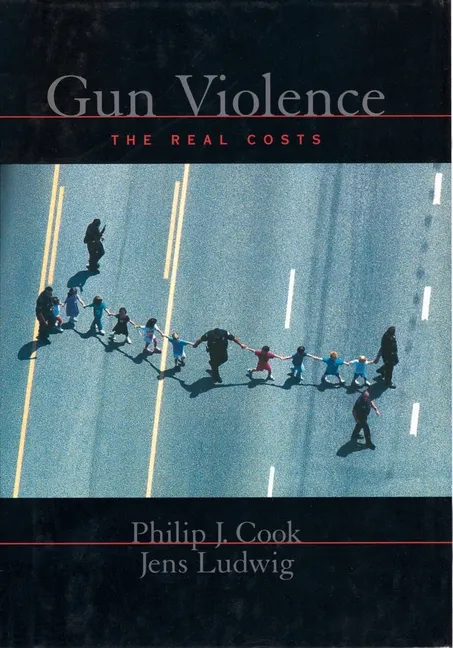
Until now researchers have assessed the burden imposed by gunshot injuries and deaths in terms of medical costs and lost productivity. Here, economists Philip Cook and Jens Ludwig widen the lens, developing a framework to calculate the full costs borne by Americans in a society where both gun violence and its ever-present threat mandate responses that touch every aspect of our lives.
All of us, no matter where we reside or how we live, share the costs of gun violence. Whether waiting in line to pass through airport security or paying taxes for the protection of public officials; whether buying a transparent book bag for our children to meet their school's post-Columbine regulations or subsidizing an urban trauma center, the steps we take are many and the expenditures enormous.
Cook and Ludwig reveal that investments in prevention, avoidance, and harm reduction, both public and private, constitute a far greater share of the gun-violence burden than previously recognized. They also employ extensive survey data to measure the subjective costs of living in a society where there is risk of being shot or losing a loved one or neighbor to gunfire.
At the same time, they demonstrate that the problem of gun violence is not intractable. Their review of the available evidence suggests that there are both additional gun regulations and targeted law enforcement measures that will help.
This urgently needed book documents for the first time how gun violence diminishes the quality of life for everyone in America. In doing so, it will move the debate over gun violence past symbolic politics to a direct engagement with the costs and benefits of policies that hold promise for reducing gun violence and may even pay for themselves.
Philip J Cook
Philip J. Cook is Sanford Professor Emeritus of Public Policy and Professor Emeritus of Economics at Duke University. He is one of the first scholars to undertake research on gun violence prevention. In 2020, his contributions in this area were recognized by the award of the Stockholm Prize in Criminology. Other honors include election to the National Academy of Medicine (2001) and as Fellow of the American Society of Criminology. He has made substantial research contributions to criminal justice policy, alcohol control policy, commercial gambling, and the causes of income inequality, as well as evaluation methods. He has consulted with several federal law enforcement agencies.
More by Philip J Cook














Why Readwise Books?
Readwise Books is an ebook & audiobook platform that automatically logs how much you and your friends read, making it fun and easy to read more. Learn more →