
Report an issue
Tell us what's wrong and we'll take a look.
Thanks – we got it. We'll review and follow up if needed.

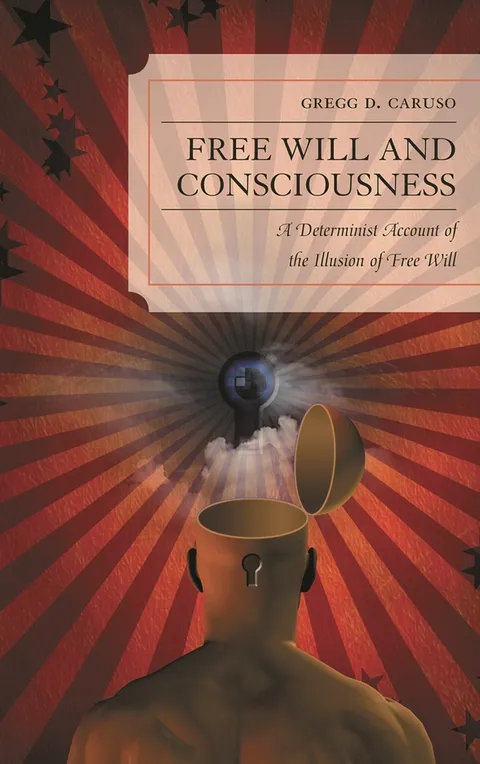
In recent decades, with advances in the behavioral, cognitive, and neurosciences, the idea that patterns of human behavior may ultimately be due to factors beyond our conscious control has increasingly gained traction and renewed interest in the age-old problem of free will. In this book, Gregg D. Caruso examines both the traditional philosophical problems long associated with the question of free will, such as the relationship between determinism and free will, as well as recent experimental and theoretical work directly related to consciousness and human agency. He argues that our best scientific theories indeed have the consequence that factors beyond our control produce all of the actions we perform and that because of this we do not possess the kind of free will required for genuine or ultimate responsibility. It is further argued that the strong and pervasive belief in free will, which the author considers an illusion, can be accounted for through a careful analysis of our phenomenology and a proper theoretical understanding of consciousness. Indeed, the primary goal of this book is to argue that our subjective feeling of freedom, as reflected in the first-person phenomenology of agentive experience, is an illusion created by certain aspects of our consciousness.
Gregg D Caruso
Gregg D. Caruso is Professor of Ethics and Director of the Patrick J. Waide Center for Applied Ethics at Fairfield University. He is author of Rejecting Retributivism: Free Will, Punishment, and Criminal Justice (2021) and Just Deserts: Debating Free Will (2021), co-authored with Daniel C. Dennett.
More by Gregg D Caruso


Why Readwise Books?
Readwise Books is an ebook & audiobook platform that automatically logs how much you and your friends read, making it fun and easy to read more. Learn more →