Report an issue
Tell us what's wrong and we'll take a look.
Thanks – we got it. We'll review and follow up if needed.
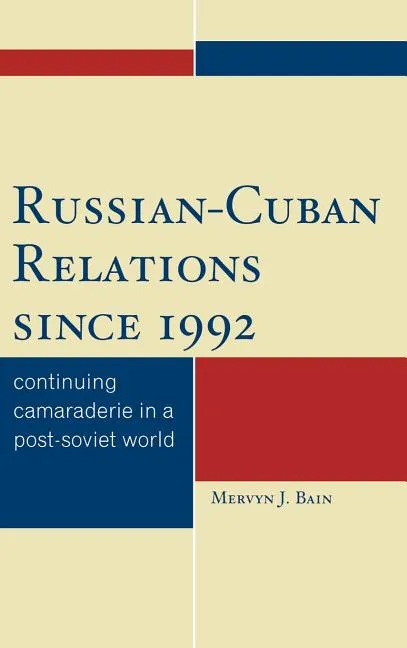
This book addresses the relationship between the Russian Federation and Cuba from 1992 to the present, the period since the disintegration of the Soviet Union. Mervyn J. Bain analyzes the reasons why the relationship between Havana and Moscow continues to thrive even after the end of the Cold War and the death of international socialism. He argues that there are five main areas to be studied in order to understand why the Russians and Cubans have maintained close cultural and political ties well into the twenty-first century.
Bain first explores the effects the disintegration of the Soviet Union had on the relationship between Moscow and Havana in the years since 1992. He goes on to describe how the two countries have adapted (or failed to adapt) to the New World Order and the ways in which their foreign policy have changed the shape of their dialogue with each other. The third and fourth sections detail both the impact of globalization and the increased cultural, economic, and military exchange between Russians and Cubans. Bain concludes by showing readers the importance of placing the Russian-Cuban relationship in an international context, especially highlighting the influence of the United States over it. This book will be of interest to those interested in post-Soviet Russian foreign policy, Cuban foreign policy, and international relations.
Mervyn J. Bain
Mervyn J. Bain is professor in the Department of Politics and International Relations and head of the School of Social Science at the University of Aberdeen, UK.
More by Mervyn J. Bain


Why Readwise Books?
Readwise Books is an ebook & audiobook platform that automatically logs how much you and your friends read, making it fun and easy to read more. Learn more →