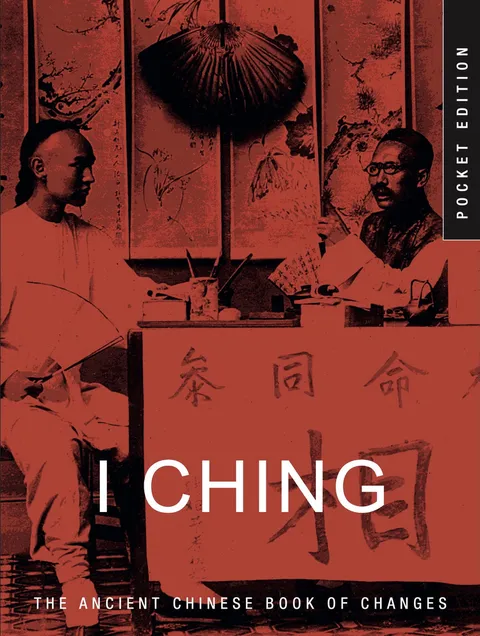
I Ching
Report an issue
Tell us what's wrong and we'll take a look.
Thanks – we got it. We'll review and follow up if needed.
The 2,500 year old Yi-jing or I Ching, translated as the 'Book of Changes', is an ancient Chinese work of divination and prophesy. Dating from the 4th century BCE, it is traditionally consulted by performing complex routines of dropping bundles of dried grass stalks. The particular patterns formed when six stalks are dropped are represented by 64 symbols called hexagrams, which show every possible combination of broken and unbroken stalks. The Book of Changes tells how to interpret the hexagrams to decide which is the best approach or action in a given situation. I Chingfeatures the 64 hexagrams and their successive interpretations, including the Judgment, written by King Wen in the 12th Century BCE, The Commentary and The Image (both attributed to Confucius, 6-5th Century BCE), and The Lines, written by King Wen's son. Accompanying The Lines are present-day interpretative texts. In a handy pocket edition with 75 illustrations, this book will allow anyone fascinated by the traditional philosophies of the East to follow in the footsteps of Confucius and use the I Ching to predict their destiny.





Confucius
Moss Roberts is Professor of East Asian Studies at NYU and the author of many translations including the Dao De Jing, Three Kingdoms, and Chinese Fairy Tales and Fantasies.
More by Confucius





Why Readwise Books?
Readwise Books is an ebook & audiobook platform that automatically logs how much you and your friends read, making it fun and easy to read more. Learn more →