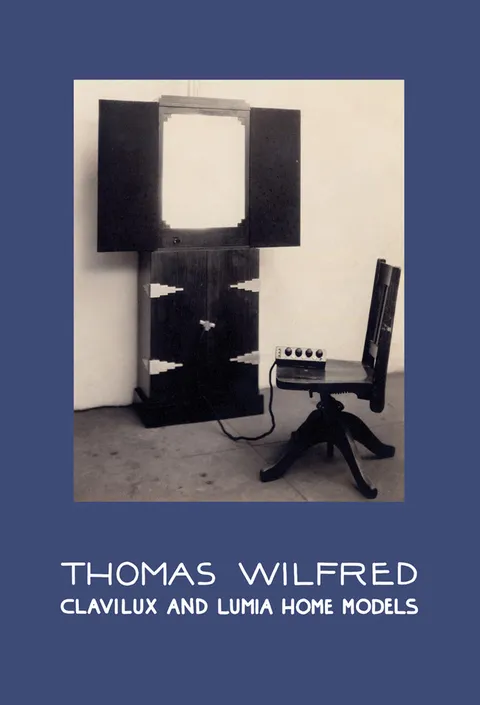
Thomas Wilfred: Clavilux and Lumia Home Models
Report an issue
Tell us what's wrong and we'll take a look.
Thanks – we got it. We'll review and follow up if needed.
Wilfred's pioneering and strangely prescient musical instrument predates television, video art and psychedelia
Inventor, designer, artist and musician Thomas Wilfred (1889-1968) devoted his life to the creation of a new art form--"Lumia," or the art of light. He invented his own version of a color organ (a term he disliked) and dubbed it the Clavilux, from the Latin meaning "light played by key." After a successful international tour in the 1920s, Wilfred reinvented these large-scale performances as self-enclosed light shows for domestic entertainment. While they enjoyed a short commercial life, Wilfred's aesthetically elegant and interactive Clavilux and Lumia home models soon found their way into storied collections. His work was included in the Museum of Modern Art's 1952 exhibition 15 Americans, where it was seen by many artists who would work with light as their medium in the 1960s and '70s.
Clavilux and Lumia Home Models presents a stimulating collection of archival material culled from the Wilfred archive at Yale University and other sources, including Wilfred's never-before-published sketches.


Why Readwise Books?
Readwise Books is an ebook & audiobook platform that automatically logs how much you and your friends read, making it fun and easy to read more. Learn more →