Report an issue
Tell us what's wrong and we'll take a look.
Thanks – we got it. We'll review and follow up if needed.
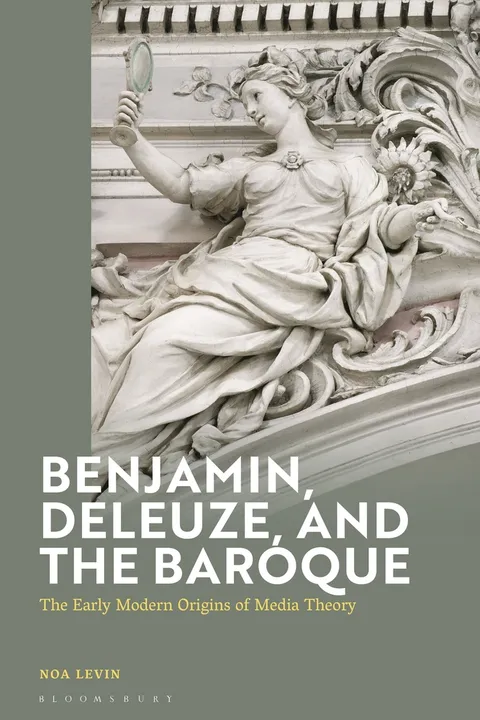
For Walter Benjamin and Gilles Deleuze, who both authored seminal theoretical works on early cinema and photography, the history of modern media begins much earlier, in Baroque culture and science. Benjamin, Deleuze and the Baroque argues that their media theories were informed by their respective readings of the philosophy and mathematics of G.W. Leibniz, and the Baroque can thus be seen as the locus of modern media.
By critically comparing Benjamin and Deleuze's interpretations of the Baroque, Levin demonstrates the extent to which their theories of visual culture are intertwined with critiques of Enlightenment historiography and politics. Using a hermeneutic comparative approach, this book argues that the juxtaposition of Benjamin's reception of Leibniz with Deleuze's highlights the extent to which both authors' theories of image and media were informed by Leibniz's concepts of expression and perspectivism, themselves inspired by ground-breaking evolutions in optics and perspective. Providing close readings of Deleuze's The Fold and Benjamin's Origin of the German Trauerspiel, which remain understudied in the English language, it explores how, in their dual roles of philosopher and cultural critic, the pair may illuminate our own age of multiple crises through the Baroque.
Noa Levin
Noa Levin is a Postdoctoral Researcher at the Academy of Architecture Mendrisio, Università della Svizzera italiana, Switzerland and an Associated Researcher at the Centre Marc Bloch, Berlin, Germany. She specialises in visual cultures, philosophy of technology and philosophy of ecology.


Why Readwise Books?
Readwise Books is an ebook & audiobook platform that automatically logs how much you and your friends read, making it fun and easy to read more. Learn more →