Report an issue
Tell us what's wrong and we'll take a look.
Thanks – we got it. We'll review and follow up if needed.
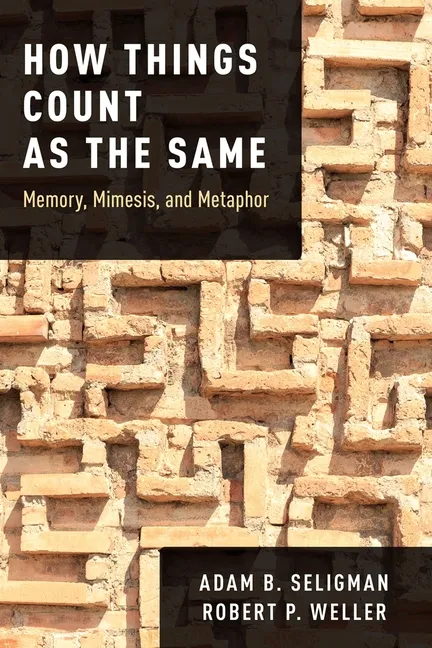
Note that "counting as" the same differs from "being" the same. Counting as the same is not an empirical question about how much or how little one person shares with another or one event shares with a previous event. Nothing is actually the same. That is why, as humans, we construct sameness all the time. In the process, of course, we also construct difference.
Creating sameness and difference leaves us with the perennial problem of how to live with difference instead of seeing it as a threat. How Things Count as the Same suggests that there are multiple ways in which we can count things as the same, and that each of them fosters different kinds of group dynamics and different sets of benefits and risks for the creation of plural societies. While there might be many ways to understand how people construct sameness, three stand out as especially important and form the focus of the book's analysis: Memory, Mimesis, and Metaphor.
Adam B Seligman
Adam B. Seligman is Director of CEDAR and Professor of Religion at Boston University.
Rahel R. Wasserfall is Director of Training and Evaluation for CEDAR and a resident scholar at the Women’s Studies Research Center at Brandeis University.
David W. Montgomery is Director of Program Development for CEDAR.
More by Adam B Seligman















Why Readwise Books?
Readwise Books is an ebook & audiobook platform that automatically logs how much you and your friends read, making it fun and easy to read more. Learn more →