Report an issue
Tell us what's wrong and we'll take a look.
Thanks – we got it. We'll review and follow up if needed.
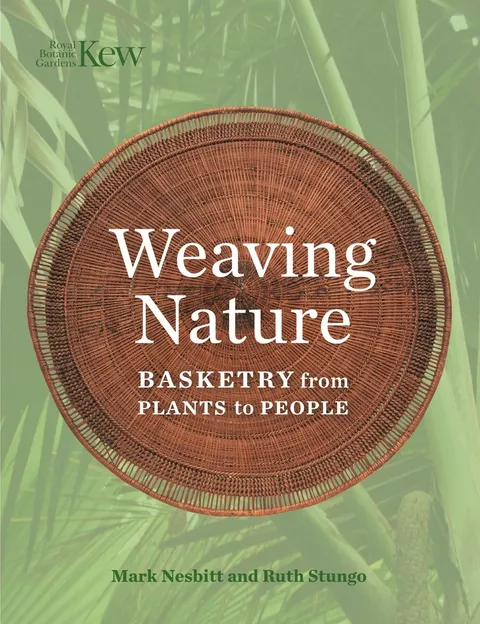
Basketry is a sustainable expression of human ingenuity, and Weaving Nature takes a holistic and interdisciplinary view of the journey from plant to basket. It explains why certain plants are favored by makers and shows how the raw materials are worked to achieve the desired use. This book covers a vast array of basketry types, ranging from netting to quivers from all parts of the world and dating from ancient Egypt to the current day.
Heavily illustrated with approximately three hundred baskets from the historic ethnobotanical collections of the Royal Botanic Gardens, Kew, this book is rich in stories of people, from the communities that made and used basketry to those that collected objects and brought them to Kew over the last two hundred years.
New discoveries in Kew's archives shed light on the complex web of empire, trade, and exploration that brought so many baskets to Kew in Victorian times. Rich in stories, historical context, and images, Weaving Nature offers new ways of appreciating one of humankind's oldest art forms.
Mark Nesbitt
Mark Nesbitt is a senior research leader at the Royal Botanic Gardens, Kew and visiting professor at Royal Holloway, University of London. He is the coauthor of Just the Tonic: A Natural History of Tonic Water, also published by Kew.
More by Mark Nesbitt








Ruth Stungo
Ruth Stungo's interest in Kew's basketry grew from an initial visit to the collection as part of a three-year basketry course undertaken in early retirement. A decade's work as the Chelsea Physic Garden's taxonomist and historical researcher provided the necessary tools to explore the richness of Kew's collections.


Why Readwise Books?
Readwise Books is an ebook & audiobook platform that automatically logs how much you and your friends read, making it fun and easy to read more. Learn more →