Report an issue
Tell us what's wrong and we'll take a look.
Thanks – we got it. We'll review and follow up if needed.
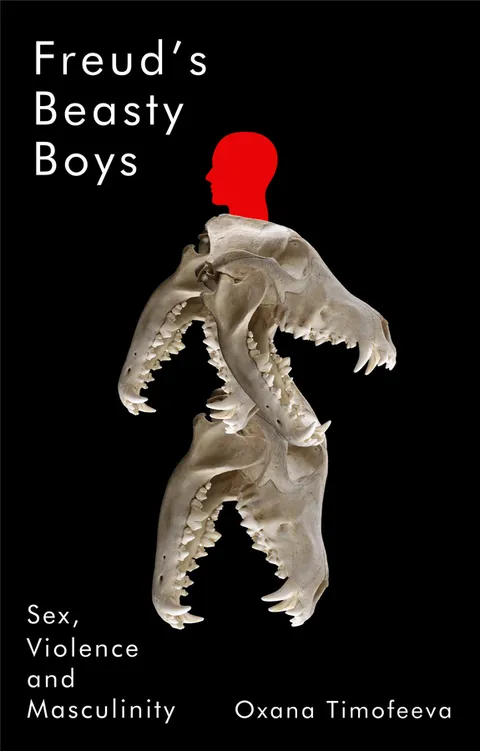
This book examines violence and sexuality after Freud. Its characters, though, are not women and men, but rather animals and children. Focusing on three famous Freudian cases in which little boys had issues with animals – Little Hans, The Rat Man, and the Wolf Man – it revises the role played by animals in male gender socialization.
Timofeeva demonstrates the relevance of psychoanalysis for anyone who wants to understand how patriarchy works, but she also points to its limitations. For Freud, sexuality creates the background of our psychic lives, and unconscious sexual fantasies are the origins of psychic disorders such as hysteria, obsessions and phobias. But what are the origins of sexual fantasies?
Timofeeva argues that behind psychic dramas of sexuality there is something else: a mechanism of violence which she calls ‘the machine of masculinity’ and which she analyses both through Freud’s cases and through the lens of religion, anthropology and her own life experiences. Wolves, rats and horses are magical agents that connect us to the world of the dead – that is, to the history of our culture in which monotheism replaced totemic practices but the basic psychosocial matrix of turning love into violence continues to reproduce itself.
Oxana Timofeeva
Oxana Timofeeva is professor of philosophy at the European University at St. Petersburg. She is the author of History of Animals: An Essay on Negativity, Immanence and Freedom (Bloomsbury, 2018).
More by Oxana Timofeeva



Why Readwise Books?
Readwise Books is an ebook & audiobook platform that automatically logs how much you and your friends read, making it fun and easy to read more. Learn more →