Report an issue
Tell us what's wrong and we'll take a look.
Thanks – we got it. We'll review and follow up if needed.
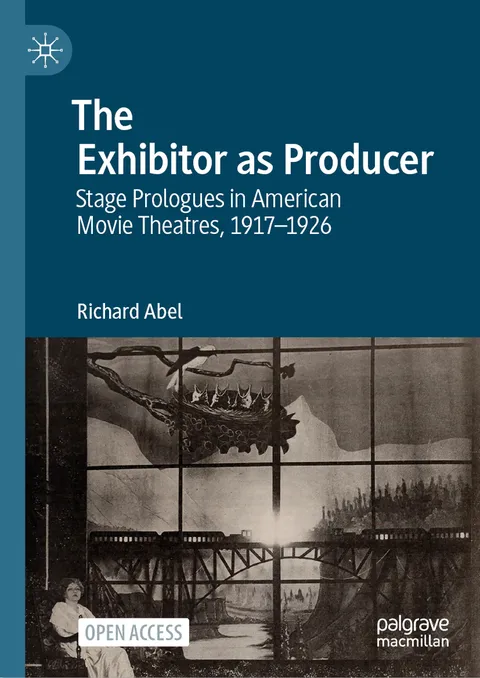
This open access book seeks answers to a series of questions about the little studied subject of prologues or theatrical presentations in American movie theaters from the late 1910s to the mid-1920s. How did prologues emerge out of prior practices? Who were the exhibitors most involved? What characteristics would come to define prologues? How widespread did they become not only in metropolitan palace cinemas but also in movie theaters in mid-sized cities and even small towns? If they generally created an atmosphere that complimented or harmonized with the feature films, could they also be what at the time was called "contrastive"? Who were the performers in these theatrical presentations? Were prologues ever described, in ads and audience responses, as a program's main attraction and to what effect?
The book comprises five chapters and up to a hundred photographs of prologue stage settings. Moreover, supplementing each chapter is one or more relevant trade press documents. Overall, the chapters construct a set of practices and typologies that came to define the theatrical presentations that typically preceded the feature films. They also advance this argument: the variety format of combined stage and screen performance in movie theaters has a longer and unexpectedly revealing history than usually assumed. In short, an exhibitor would have a certain degree of creativity in his/her programming, which in turn could strongly impact an audience's movie-going experience.
Richard Abel
Richard Abel is National Endowment for the Humanities Professor of English at Drake University. His books include French Cinema: The First Wave, 1915-1929 (1984), winner of the Theatre Library Association Award, and French Film Theory and Criticism: A History/Anthology, 1907-1939 (1988), winner of the Jay Leyda Prize in Cinema Studies.
More by Richard Abel




Why Readwise Books?
Readwise Books is an ebook & audiobook platform that automatically logs how much you and your friends read, making it fun and easy to read more. Learn more →