Report an issue
Tell us what's wrong and we'll take a look.
Thanks – we got it. We'll review and follow up if needed.
How poor countries can ignite economic growth without waiting for global action or the creation of ideal local conditions
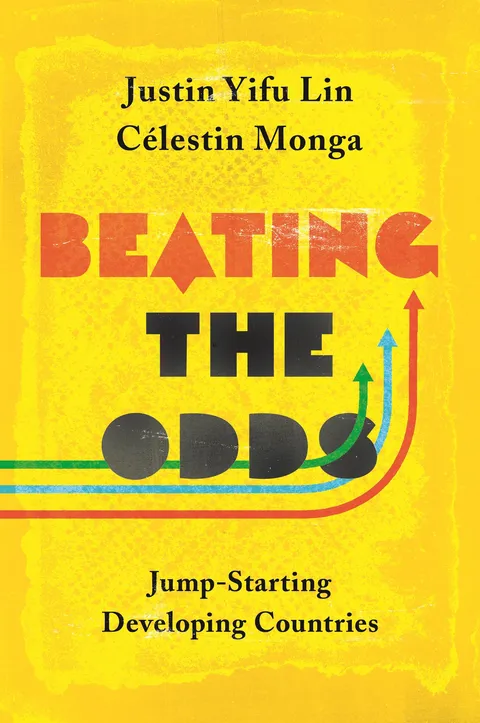
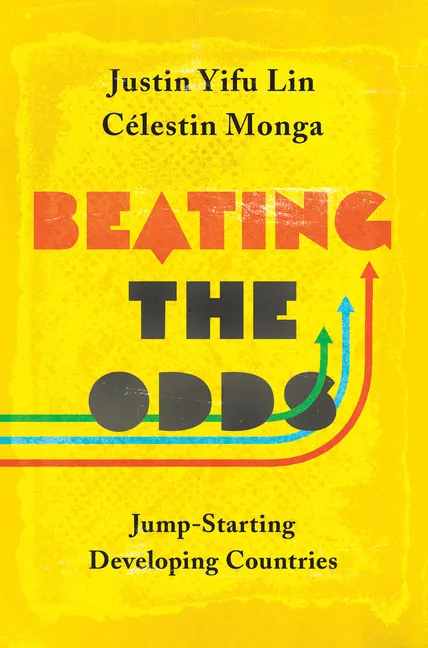
Contrary to conventional wisdom, countries that ignite a process of rapid economic growth almost always do so while lacking what experts say are the essential preconditions for development, such as good infrastructure and institutions. In Beating the Odds, two of the world's leading development economists begin with this paradox to explain what is wrong with mainstream development thinking—and to offer a practical blueprint for moving poor countries out of the low-income trap regardless of their circumstances.
Justin Yifu Lin, the former chief economist of the World Bank, and Célestin Monga, the chief economist of the African Development Bank, propose a development strategy that encourages poor countries to leap directly into the global economy by building industrial parks and export-processing zones linked to global markets. Countries can leverage these zones to attract light manufacturing from more advanced economies, as East Asian countries did in the 1960s and China did in the 1980s. By attracting foreign investment and firms, poor countries can improve their trade logistics, increase the knowledge and skills of local entrepreneurs, gain the confidence of international buyers, and gradually make local firms competitive. This strategy is already being used with great success in Vietnam, Cambodia, Bangladesh, Mauritius, Ethiopia, Rwanda, and other countries. And the strategy need not be limited to traditional manufacturing but can also include agriculture, the service sector, and other activities.
Beating the Odds shows how poor countries can ignite growth without waiting for global action or the creation of ideal local conditions.
Justin Yifu Lin
Justin Yifu Lin is Senior Vice President and Chief Economist of the World Bank. He obtained his PhD in economics from the University of Chicago in 1986 and returned to China in 1987, the first PhD in social sciences to return from abroad after China started economic reform in 1979. He was the founding director of China Center for Economic Research at Peking University from 1994 to 2008 and is the author of seventeen books, including The China Miracle (1996), State-Owned Enterprise Reform in China (2001) and Economic Development and Transition (Cambridge, 2009).
More by Justin Yifu Lin






Why Readwise Books?
Readwise Books is an ebook & audiobook platform that automatically logs how much you and your friends read, making it fun and easy to read more. Learn more →