Report an issue
Tell us what's wrong and we'll take a look.
Thanks – we got it. We'll review and follow up if needed.
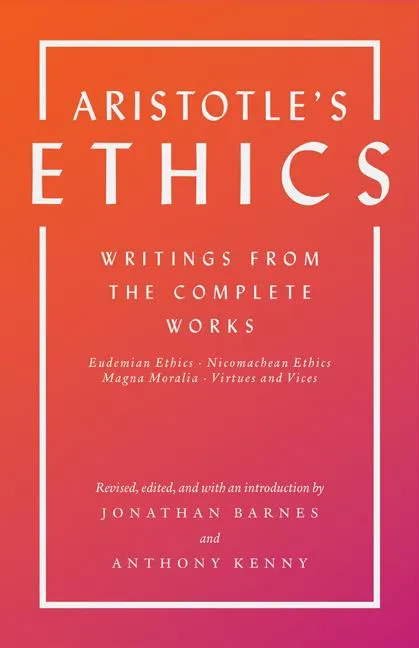
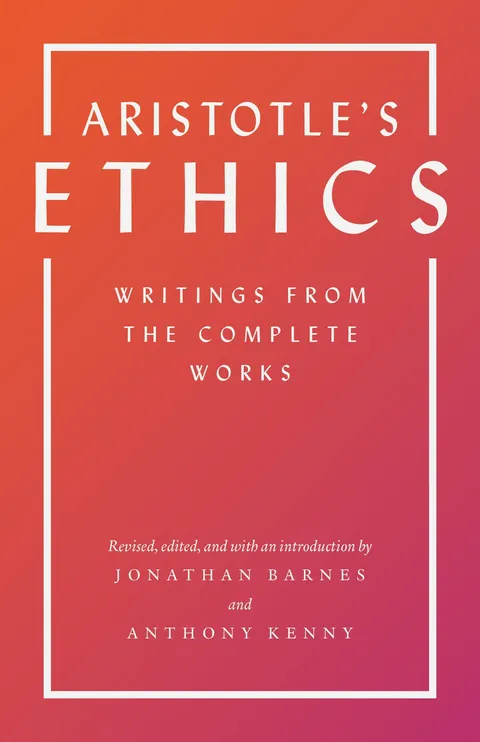
Aristotle's moral philosophy is a pillar of Western ethical thought. It bequeathed to the world an emphasis on virtues and vices, happiness as well-being or a life well lived, and rationally motivated action as a mean between extremes. Its influence was felt well beyond antiquity into the Middle Ages, particularly through the writings of St. Thomas Aquinas. In the past century, with the rise of virtue theory in moral philosophy, Aristotle’s ethics has been revived as a source of insight and interest. While most attention has traditionally focused on Aristotle’s famous Nicomachean Ethics, there are several other works written by or attributed to Aristotle that illuminate his ethics: the Eudemian Ethics, the Magna Moralia, and Virtues and Vices.
This book brings together all four of these important texts, in thoroughly revised versions of the translations found in the authoritative complete works universally recognized as the standard English edition. Edited and introduced by two of the world’s leading scholars of ancient philosophy, this is an essential volume for anyone interested in the ethical thought of one of the most important philosophers in the Western tradition.
Aristotle
Aristotle (384 BC-322 BC) He was an ancient Greek philosopher and scientist whose thought determined the course of Western intellectual history for two centuries. In 335, he established his own school in Athens, the Lyceum. His intellectual range was very wide, covering the greater part of science and various art streams. His ethical and political theory, particularly his concepts of ethical virtues and human growing "happiness," continues to have a philosophical impact. He wrote productively. His major surviving works include the Organon, De Anima's (On the Soul), Physics, Metaphysics, Nicomachean ethics, Eudemian Ethics, Magna Moralia, Poetics, Politics, and Rhetoric, as well as more different works on science and natural history. His father, Nicomachus, was King Amyntas of Macedon's personal physician. Aristotle learned about biology and medical information from his father when he was young. When Aristotle was approximately thirteen, both of his parents died, and Proxenus of Atarneus became his guardian. Although little is known about Aristotle's youth, he most likely spent some time at the Macedonian palace, where he formed his initial links with the Macedonian royalty.
More by Aristotle









Why Readwise Books?
Readwise Books is an ebook & audiobook platform that automatically logs how much you and your friends read, making it fun and easy to read more. Learn more →