Report an issue
Tell us what's wrong and we'll take a look.
Thanks – we got it. We'll review and follow up if needed.
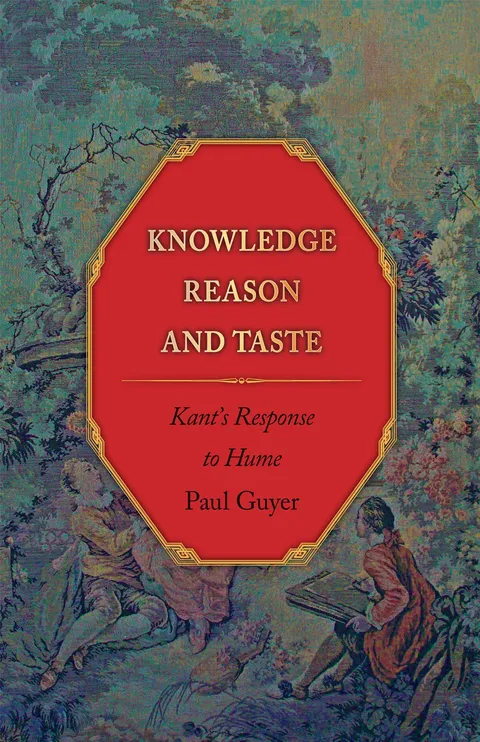
Immanuel Kant famously said that he was awoken from his "dogmatic slumbers," and led to question the possibility of metaphysics, by David Hume's doubts about causation. Because of this, many philosophers have viewed Hume's influence on Kant as limited to metaphysics. More recently, some philosophers have questioned whether even Kant's metaphysics was really motivated by Hume. In Knowledge, Reason, and Taste, renowned Kant scholar Paul Guyer challenges both of these views. He argues that Kant's entire philosophy--including his moral philosophy, aesthetics, and teleology, as well as his metaphysics--can fruitfully be read as an engagement with Hume.
In this book, the first to describe and assess Hume's influence throughout Kant's philosophy, Guyer shows where Kant agrees or disagrees with Hume, and where Kant does or doesn't appear to resolve Hume's doubts. In doing so, Guyer examines the progress both Kant and Hume made on enduring questions about causes, objects, selves, taste, moral principles and motivations, and purpose and design in nature. Finally, Guyer looks at questions Kant and Hume left open to their successors.
Paul Guyer
Paul Guyer is the Jonathan Nelson Professor of Humanities and Philosophy at Brown University, USA. He is the author of eleven books on the philosophy of Kant, most recently Virtues of Freedom (2016) and Kant on the Rationality of Morality (2019), as well as of A History of Modern Aesthetics in three volumes (2014).
More by Paul Guyer


Why Readwise Books?
Readwise Books is an ebook & audiobook platform that automatically logs how much you and your friends read, making it fun and easy to read more. Learn more →