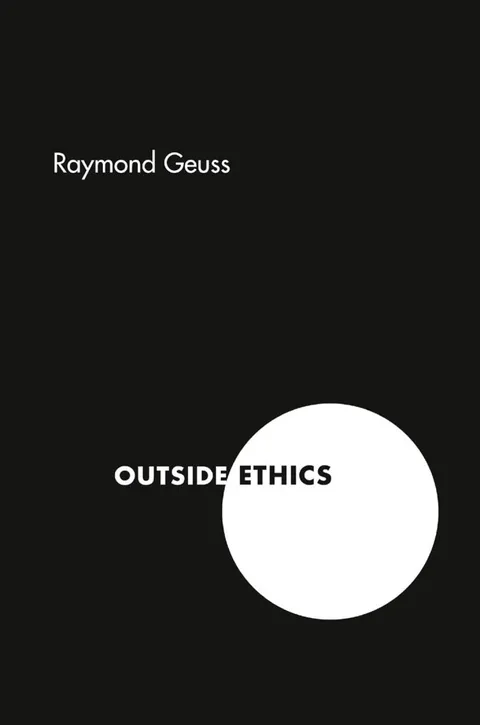
Outside Ethics
Report an issue
Tell us what's wrong and we'll take a look.
Thanks – we got it. We'll review and follow up if needed.

Outside Ethics brings together some of the most important and provocative works by one of the most creative philosophers writing today. Seeking to expand the scope of contemporary moral and political philosophy, Raymond Geuss here presents essays bound by a shared skepticism about a particular way of thinking about what is important in human life--a way of thinking that, in his view, is characteristic of contemporary Western societies and isolates three broad categories of things as important: subjective individual preferences, knowledge, and restrictions on actions that affect other people (restrictions often construed as ahistorical laws). He sets these categories in a wider context and explores various human phenomena--including poetry, art, religion, and certain kinds of history and social criticism--that do not fit easily into these categories. As its title suggests, this book seeks a place outside conventional ethics.
Following a brief introduction, Geuss sets out his main concerns with a focus on ethics and politics. He then expands these themes by discussing freedom, virtue, the good life, and happiness. Next he examines Theodor Adorno's views on the relation between suffering and knowledge, the nature of religion, and the role of history in giving us critical distances from existing identities. From here he moves to aesthetic concerns. The volume closes by looking at what it is for a human life to have "gaps"--to be incomplete, radically unsatisfactory, or a failure.
Raymond Geuss
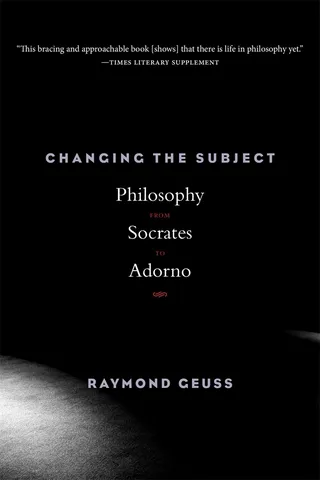
Raymond Geuss is Professor Emeritus in the Faculty of Philosophy at the University of Cambridge. His books include Changing the Subject, Reality and Its Dreams, and Who Needs a World View?
More by Raymond Geuss



















Why Readwise Books?
Readwise Books is an ebook & audiobook platform that automatically logs how much you and your friends read, making it fun and easy to read more. Learn more →