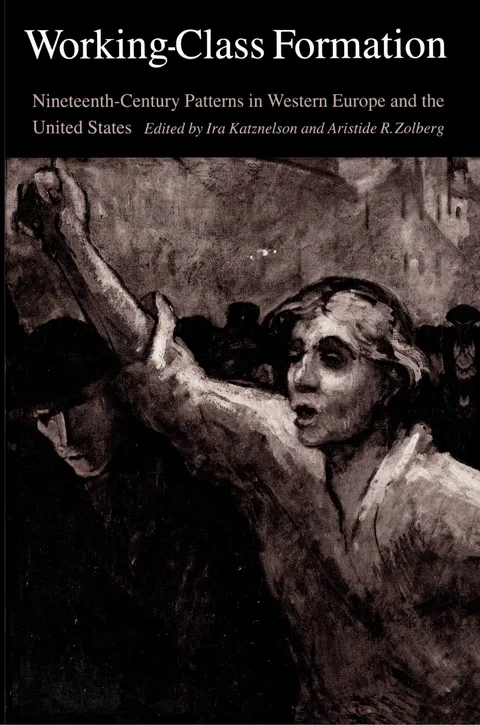
Working-Class Formation
Ninteenth-Century Patterns in Western Europe and the United States
Report an issue
Tell us what's wrong and we'll take a look.
Thanks – we got it. We'll review and follow up if needed.
Applying an original theoretical framework, an international group of historians and social scientists here explores how class, rather than other social bonds, became central to the ideologies, dispositions, and actions of working people, and how this process was translated into diverse institutional legacies and political outcomes. Focusing principally on France. Germany, and the United States, the contributors examine the historically contingent connections between class, as objectively structured and experienced, and collective perceptions and responses as they develop in work, community, and politics.
Following Ira Katznelson's introduction of the analytical concepts, William H. Sewell, Jr., Michelle Perrot, and Alain Cottereau discuss France; Amy Bridges and Martin Shefter, the United States; and Jargen Kocka and Mary Nolan, Germany. The conclusion by Aristide R. Zolberg comments on working-class formation up to World War I, including developments in Great Britain, and challenges conventional wisdom about class and politics in the industrializing West.
Aristide R Zolberg
Aristide R. Zolberg (1931-2013) was Professor of Political Science and Director of the International Center for Migration, Ethnicity, and Citizenship at the Graduate Faculty, New School University, New York.


Why Readwise Books?
Readwise Books is an ebook & audiobook platform that automatically logs how much you and your friends read, making it fun and easy to read more. Learn more →