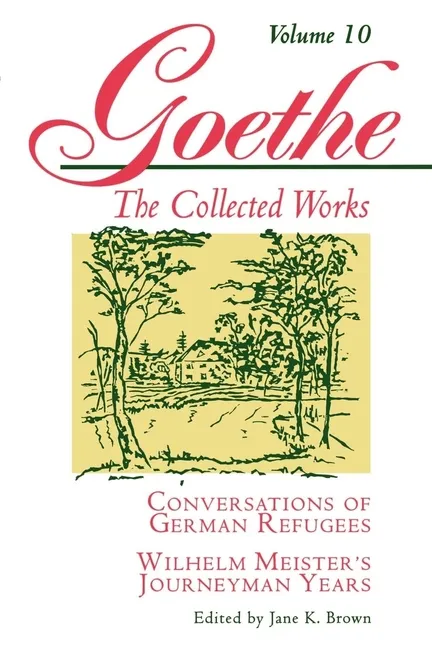
Goethe, Volume 10
Conversations of German Refugees--Wilhelm Meister's Journeyman Years or the Renunciants
Report an issue
Tell us what's wrong and we'll take a look.
Thanks – we got it. We'll review and follow up if needed.
Goethe was a master of the short prose form. His two narrative cycles, Conversations of German Refugees and Wilhelm Meister's Journeyman Years, both written during a high point of his career, address various social issues and reveal his experimentation with narrative and perspective. A traditional cycle of novellas, Conversations of German Refugees deals with the impact and significance of the French Revolution and suggests Goethe's ideas on the social function of his art. Goethe's last novel, Wilhelm Meister's Journeyman Years, is a sequel to Wilhelm Meister's Apprenticeship and to Conversations of German Refugees and is considered to be his most remarkable novel in form.
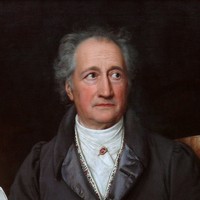
Johann Wolfgang von Goethe
Johann Wolfgang von Goethe was a German writer, poet, playwright, and philosopher, widely regarded as one of the most influential figures in Western literature. Born on August 28, 1749, in Frankfurt, Germany, he is best known for his works such as Faust, The Sorcerer's Apprentice, and Erlkönig. Goethe's works span a wide range of genres, including drama, poetry, and philosophy, and he was a central figure in the Sturm und Drang literary movement. His writing not only revolutionized German literature but also had a profound impact on political and philosophical thought. Throughout his career, Goethe was influenced by figures such as Friedrich Schiller and William Shakespeare, and his ideas on individuality and the human condition helped shape European intellectual history. Goethe was married to Christiane Vulpius from 1806 until her death in 1816. He spent much of his life in Weimar, Germany, where he died on March 22, 1832, at the age of 82. His legacy continues to influence writers, artists, and thinkers across the globe. His exploration of human nature and existential questions remains relevant in modern cultural and intellectual discussions.
More by Johann Wolfgang von Goethe


Krishna Winston
Translated by
Krishna Winston is the Marcus L. Taft Professor of German Language and Literature at Wesleyan University. She has translated more than thirty books, including previous works by Peter Handke and works by Werner Herzog, Günter Grass, Christoph Hein, and Goethe.


Why Readwise Books?
Readwise Books is an ebook & audiobook platform that automatically logs how much you and your friends read, making it fun and easy to read more. Learn more →