Report an issue
Tell us what's wrong and we'll take a look.
Thanks – we got it. We'll review and follow up if needed.
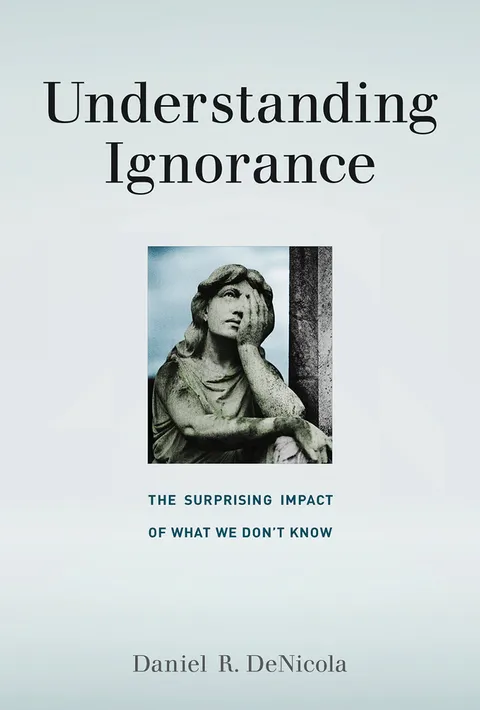
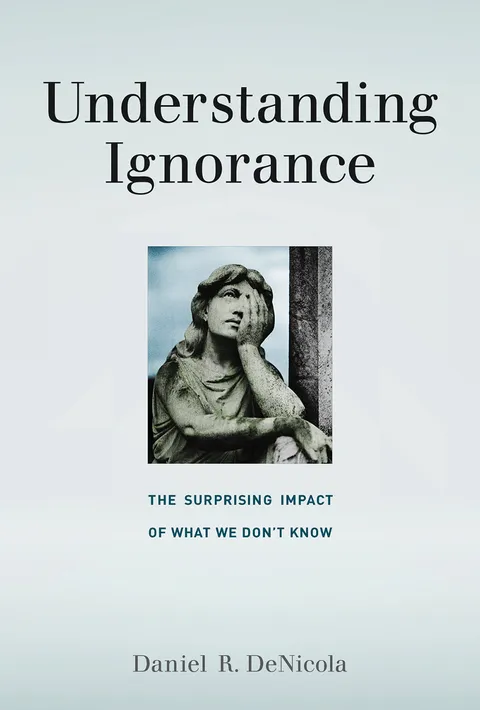
Ignorance is trending. Politicians boast, “I'm not a scientist.” Angry citizens object to a proposed state motto because it is in Latin, and “This is America, not Mexico or Latin America.” Lack of experience, not expertise, becomes a credential. Fake news and repeated falsehoods are accepted and shape firm belief. Ignorance about American government and history is so alarming that the ideal of an informed citizenry now seems quaint. Conspiracy theories and false knowledge thrive. This may be the Information Age, but we do not seem to be well informed. In this book, philosopher Daniel DeNicola explores ignorance—its abundance, its endurance, and its consequences.
DeNicola aims to understand ignorance, which seems at first paradoxical. How can the unknown become known—and still be unknown? But he argues that ignorance is more than a lack or a void, and that it has dynamic and complex interactions with knowledge. Taking a broadly philosophical approach, DeNicola examines many forms of ignorance, using the metaphors of ignorance as place, boundary, limit, and horizon. He treats willful ignorance and describes the culture in which ignorance becomes an ideological stance. He discusses the ethics of ignorance, including the right not to know, considers the supposed virtues of ignorance, and concludes that there are situations in which ignorance is morally good.
Ignorance is neither pure nor simple. It is both an accusation and a defense (“You are ignorant!” “Yes, but I didn't know!”). Its practical effects range from the inconsequential to the momentous. It is a scourge, but, DeNicola argues daringly, it may also be a refuge, a value, even an accompaniment to virtue.


Why Readwise Books?
Readwise Books is an ebook & audiobook platform that automatically logs how much you and your friends read, making it fun and easy to read more. Learn more →