Report an issue
Tell us what's wrong and we'll take a look.
Thanks – we got it. We'll review and follow up if needed.
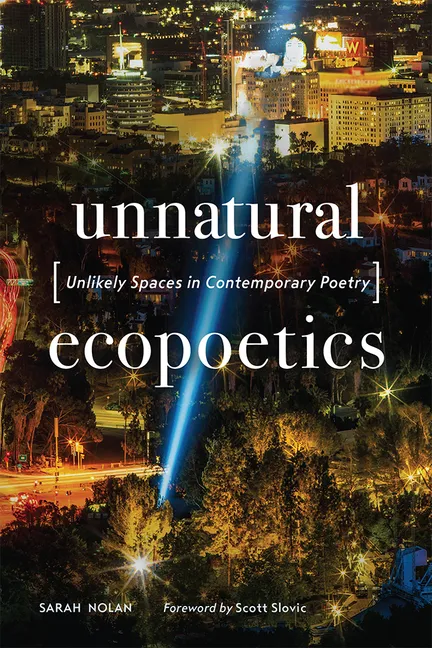
By approaching environments in a new way, Nolan closes this gap and recognizes how contemporary poets employ self-reflexive commentary and formal experimentation in order to create new natural/cultural environments on the page. She proposes a radical new direction for ecopoetics and deploys it in relation to four major American poets. Working from literal to textual spaces through the contemporary poetry of A.R. Ammons's Garbage, Lyn Hejinian's My Life, Susan Howe's The Midnight, and Kenneth Goldsmith's Seven American Deaths and Disasters, the book presents applications of unnatural ecopoetics in poetic environments, ones that do not engage with traditional ideas of nature and would otherwise remain outside the scope of ecocritical and ecopoetic studies.
Nolan proposes a new practical approach for reading poetic language. Ecocriticism is a very fluid and evolving discipline, and Nolan's pioneering new book pushes the boundaries of second-wave ecopoetics--the fundamental issue being what is nature/natural, and how does poetic language, particularly self-conscious contemporary poetic agency, contribute to and complicate that question.
Sarah Nolan
Sarah Nolan co-founded The Abundant Table, an Episcopal rooted nonprofit farm and worshiping community. She serves on the Episcopal General Convention's Task Force on Creation Care and Environmental Racism and is actively engaged in work and conversations around emergent ministries, organizational vitality and the intersection of food, faith and the environment. She lives in Richmond, Virginia.
More by Sarah Nolan



Why Readwise Books?
Readwise Books is an ebook & audiobook platform that automatically logs how much you and your friends read, making it fun and easy to read more. Learn more →