Report an issue
Tell us what's wrong and we'll take a look.
Thanks – we got it. We'll review and follow up if needed.
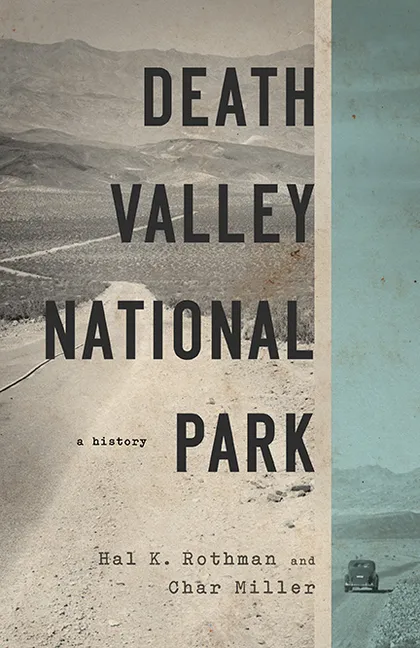
This history begins with a discussion of the physical setting, its geography and geology, and descriptions of the Timbisha, the first peoples to inhabit this tough and dangerous landscape. In the 19th-century and early 20th century, new arrivals came to exploit the mineral resources in the region and develop permanent agricultural and resort settlements. Although Death Valley was established as a National Monument in 1933, fear of the harsh desert precluded widespread acceptance by both the visiting public and its own administrative agency. As a result, Death Valley lacked both support and resources. This volume details the many debates over the park's size, conflicts between miners, farmers, the military, and wilderness advocates, the treatment of the Timbisha, and the impact of tourists on its cultural and natural resources.
In time, Death Valley came to be seen as one of the great natural wonders of the United States, and was elevated to full national park status in 1994. The history of Death Valley National Park embodies the many tensions confronting American environmentalism.
Char Miller
Char Miller, formerly a professor of history at Trinity University, is the W. M. Keck Professor of Environmental Analysis at Pomona College. He is the author of the award-winning Gifford Pinchot and the Making of Modern Environmentalism, Deep in the Heart of San Antonio: Land and Life in South Texas, and Public Lands/Public Debates: A Century of Controversy, as well as the editor of On the Border: An Environmental History of San Antonio and Fifty Years of the Texas Observer. His most recent books for Trinity University Press are Not So Golden State: Sustainability vs. the California Dream and On the Edge: Water, Immigration, and Politics in the Southwest. Miller is a frequent contributor to print, electronic, and social media.
More by Char Miller



Why Readwise Books?
Readwise Books is an ebook & audiobook platform that automatically logs how much you and your friends read, making it fun and easy to read more. Learn more →