Report an issue
Tell us what's wrong and we'll take a look.
Thanks – we got it. We'll review and follow up if needed.
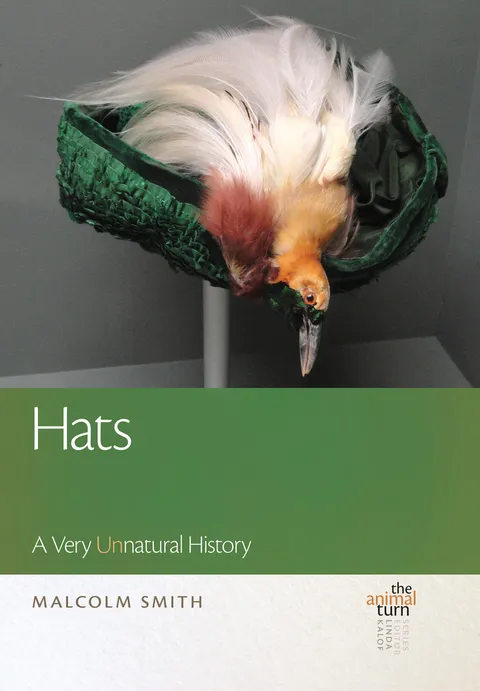
For such simple garments, hats have had a devastating impact on wildlife throughout their long history. Made of wild-caught mammal furs, decorated with feathers or whole stuffed birds, historically they have driven many species to near extinction. By the turn of the twentieth century, egrets, shot for their exuberant white neck plumes, had been decimated; the wild ostrich, killed for its feathers until the early 1900s, was all but extirpated; and vast numbers of birds of paradise from New Guinea and hummingbirds from the Americas were just some of the other birds killed to decorate ladies' hats. At its peak, the hat trade was estimated to be killing 200 million birds a year. At the end of the nineteenth century, it was a trade valued at £20 million (over $25 million) a year at the London feather auctions. Weight for weight, exotic feathers were more valuable than gold. Today, while no wild birds are captured for feather decoration, some wild animals are still trapped and killed for hatmaking. A fascinating read, Hats will have you questioning the history of your headwear.
Malcolm Smith
Born in 1962, Malcolm Smith was raised in Western Massachusetts. Captivated by the sound of Tibetan ritual music in 1984, he began his study of the Dharma. He met his first formal teacher, H. H. Sakya Trizin, in 1989. He studied Buddhist philosophy and Tibetan language under the guidance of Khenpo Migmar Tseten for the next five years at Sakya Institute for Buddhist Studies in Cambridge, Massachusetts. In 1990 Malcolm travelled to Nepal to receive lamdré from the late H. H. Sakya Dagchen.
He received his first Dzogchen teachings from Chögyal Namkhai Norbu in 1992. In 1993 he met his second Dzogchen teacher, Khenpo Jigme Phuntsok, receiving important transmissions. During this year he entered a three-year solitary retreat. In 1998 he met H. H. Penor Rinpoche and received the complete empowerments of the mahayoga section of the Nyingma Kama as well as teachings on the Namchö preliminary practices. In 2001, he met his third Dzogchen teacher, the late Kunzang Dechen Lingpa, from whom he received the Nyinthig Yazhi in its entirety, as well as the formal Ngakpa empowerment in 2004. He met his fourth Dzogchen teacher, H. H. Taklung Tsetrul Rinpoche, in 2001, from whom he received the entire transmission of the Gongpa Zangthal in 2010, as well other transmissions. He received the transmission of the Seventeen Tantras from Khenpo Tenzin Thinley in 2012 and again from Tulku Dakpa Rinpoche in 2022. Since 2018, he has been studying under Khenchen Namdrol Tsering of Namdrol Ling MonasteryIn addition, Malcolm has received Sakya, Kagyü, and Nyingma teaching cycles from many other lamas.
Malcolm Smith was awarded the title of acarya by Khenpo Migmar Tseten of Sakya Institute in 2004. In 2008 Malcolm was granted the title of lama by Lama Ngawang Tsultrim, abbot of Dhongag Tharling. In 2009 Malcolm graduated from Shang Shung Institute of America as a doctor of Tibetan medicine, completing an internship in Xining, in the Amdo province of northeast Tibet.
Since 1992 Malcolm Smith has worked on a wide variety of texts for Sakya, Drikung Kagyü, and Nyingma groups, as well as medical and astrological texts.
More by Malcolm Smith



Why Readwise Books?
Readwise Books is an ebook & audiobook platform that automatically logs how much you and your friends read, making it fun and easy to read more. Learn more →