Report an issue
Tell us what's wrong and we'll take a look.
Thanks – we got it. We'll review and follow up if needed.
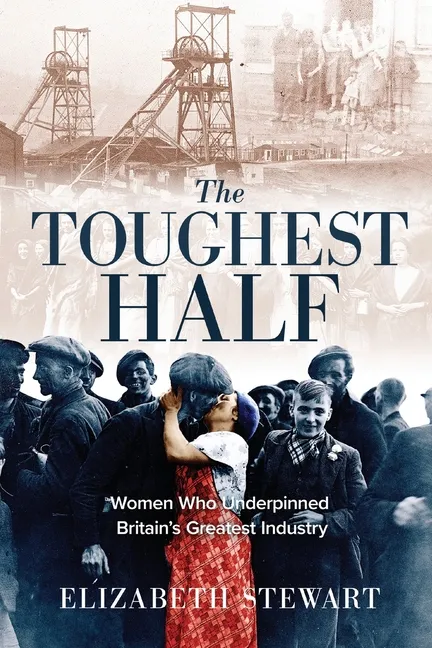
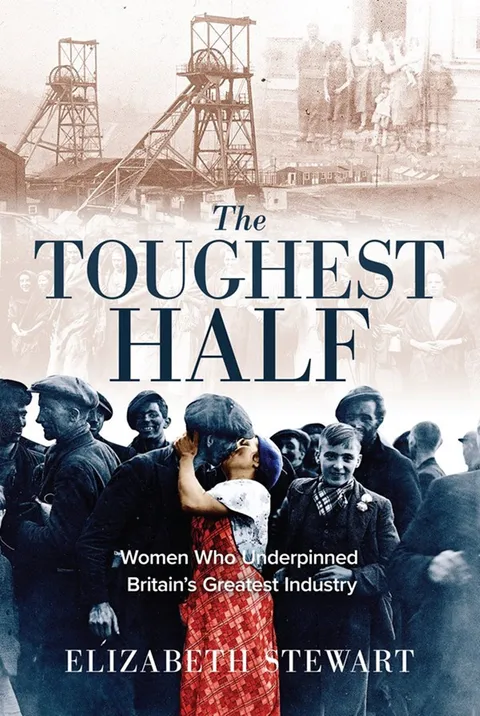
Lasting barely two centuries throughout the 1700s and 1800s, the Industrial Revolution in Britain propelled the country into the role of the world's premier industrial nation. Known as the 'midwife of the Industrial Revolution' coal was, literally, the driving force behind this power.
Although referred to as 'the black diamond', coal is not a thing of beauty, yet like the true diamond, it is representative of power and wealth.
Coal mining usually evokes images of tough men, glistening with the sweat of underground toil. We talk about man-power and manual labour; the industry has become synonymous with men. Rarely, if ever, do women come to mind, yet, until an Act of 1942 banned them from working down the mines, women worked alongside men, their toil equally as gruelling in conditions jut as appalling. Forbidden by Victorian prudery from working underground, they were replaced, at much greater expense to the mine owners, by ponies.
The efforts of these women, every bit as responsible as men for creating Britain's once greatest industry, have rarely been acknowledged.
During the 1926 general strike and lockout, Herbert Smith, President of the Miners' Federation of Great Britain, reported that half the attendees at union meetings were women, "And these", he insisted, "are always the toughest half."
This book tells of the history of coal and coal mining from mediaeval times to the demise of the industry in Britain in the 1990s, and describes women's role in this history and how it affected their lives.
Through a combination of historical narrative, fiction and biography, the book gives a voice to these diminished 'others' - wives, mothers and daughters - whose persistence, courage, pride and sacrifice also contributed to the profits of wealthy mine owners.
Their stories are told through the prism of historical events - the frightened little girl forced to work alone in subterranean darkness, the poverty-stricken young woman confronting an unwanted pregnancy, those enduring the loss of sons and partners to a deadly occupation and women who, through adversity, took the opportunity to publicly reveal their collective strength.
Gentle and gruff, warm-hearted and implacable, these battlers against grime, beaters of carpets, painters, decorators and cooks, activists and staunch supporters of strikes and lockouts, underpinned the foundations of Britain's coal industry.
Woven through this book is the true story of the author's mother, a miner's daughter. Her life too was hard and closely entwined with coal mining to which she made, over many years, a considerable contribution not only to the industry but to the mining communities in which she worked.
Elizabeth Stewart
Lizzie Stewart is Lecturer in Modern Languages, Culture, and Society at King's College, London. Lizzie's work operates primarily at the intersection of Migration Studies, Modern Languages, and Theater
and Performance, and has focused on the relationship between labor migration and cultural production. She has published extensively on
254 n otes on the Contributors
postmigrant theater, but has also published on literature and film, and was co-editor of the Oxford German Studies special issue on Emine Sevgi Özdamar in 2016. Lizzie's first book, Performing New German Realities: Turkish-German Scripts of Postmigration, is forthcoming with Palgrave Macmillan in 2021.
More by Elizabeth Stewart




Why Readwise Books?
Readwise Books is an ebook & audiobook platform that automatically logs how much you and your friends read, making it fun and easy to read more. Learn more →