Report an issue
Tell us what's wrong and we'll take a look.
Thanks – we got it. We'll review and follow up if needed.
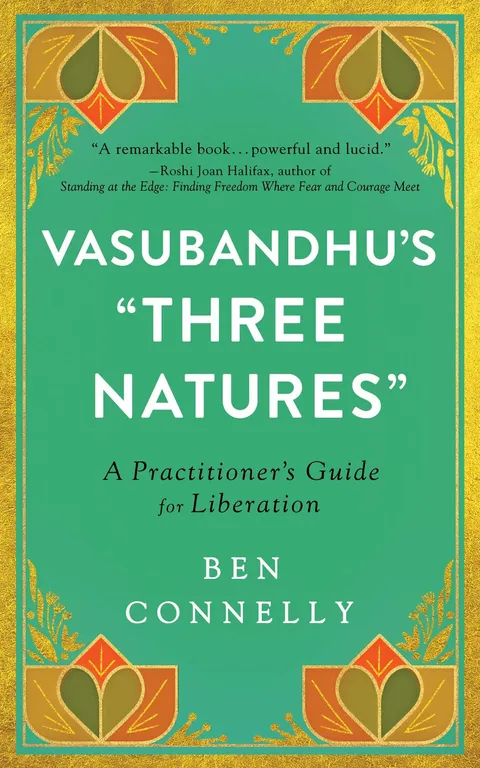
In this book, Ben Connelly shows the power of integrating early Buddhist psychology with the Mahayana emphasis on collective liberation. You’ll discover how wisdom from fourth-century India can be harnessed to heal and transform systems of harm within ourselves and our communities.
The three natures (svabhavas)—the imaginary, dependent, and complete, realized natures—are inherent aspects of all phenomena. The imaginary nature of things is what we think they are. Their dependent nature is that they appear to arise from countless conditions. The complete, realized nature is that they aren’t as we imagine them to be: things that can be grasped or pushed away. The three natures form the backbone of Yogacara philosophy, and by showing us how to see beyond our preconceived notions of ourselves and others, beyond the things that we’re convinced are “true,” they open up a path to personal and communal healing.
Dive into this empowering approach to freedom from suffering, from harmful personal and social patterns, and to finding peace and joyfulness in the present.




Teng Weijen
Translated by
Weijen Teng, translator of Vasubandhu's classic Treatise on the Three Natures, is an assistant professor at Dharma Drum University in Taiwan. He has a BA in Pali and Buddhist studies (Kelaniya, Sri Lanka), an MA in Sanskrit (Pune, India), and a PhD in religious studies (Harvard University). His particular areas of research include Abhidharma and Yogacara meditation theories, Chinese translations of Sanskrit texts, and the development of contemporary Chinese Buddhism.


Why Readwise Books?
Readwise Books is an ebook & audiobook platform that automatically logs how much you and your friends read, making it fun and easy to read more. Learn more →