Report an issue
Tell us what's wrong and we'll take a look.
Thanks – we got it. We'll review and follow up if needed.
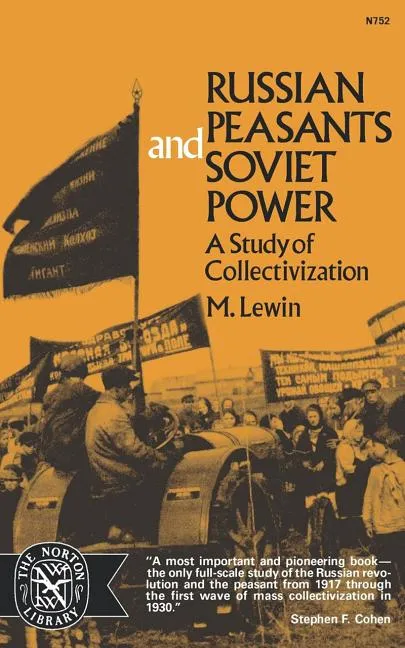
The collectivization of the peasants in the USSR constituted a social upheaval of a totally unprecedented nature. It was one of the most remarkable events of the present century and it has a history as long as that of Soviet power itself. The idea of a collectivized agriculture, much favoured by the leadership after the revolution, had been left in abeyance during the NEP period. Interest in the idea, and in the collective movement, revived at the time of the 'grain crisis' at the beginning of 1928. It was during this crisis that collectivization of the peasantry and the creation of a powerful kolkhoz and sovkhoz sector began to be taken seriously as a means of solving, at one and the same time, both the formidable problem of grain and the whole 'accursed problem' of relations between the Soviet authorities and the peasants.
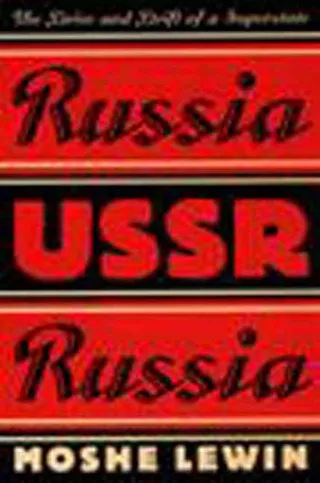
Moshe Lewin
Moshe Lewin was a hugely respected historian of the Soviet Union. Professor of Soviet Studies at the University of Pennsylvania, his books include Stalinism and Nazism: Dictatorships in Comparison and The Making of the Soviet System: Essays in the Social History of Interwar Russia.
More by Moshe Lewin



Why Readwise Books?
Readwise Books is an ebook & audiobook platform that automatically logs how much you and your friends read, making it fun and easy to read more. Learn more →