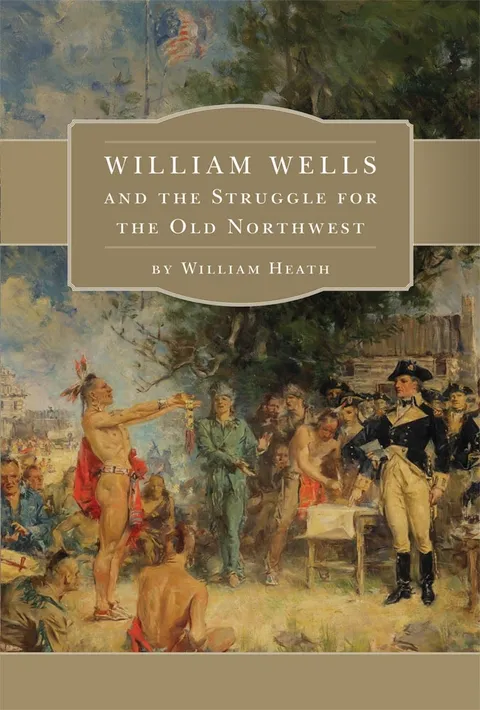
William Wells and the Struggle for the Old Northwest
Report an issue
Tell us what's wrong and we'll take a look.
Thanks – we got it. We'll review and follow up if needed.
A servant of empire with deep sympathies for the people his country sought to dispossess, Wells married Chief Little Turtle's daughter and distinguished himself as a Miami warrior, as an American spy, and as an Indian agent whose multilingual skills made him a valuable interpreter. Heath examines pioneer life in the Ohio Valley from both white and Indian perspectives, yielding rich insights into Wells's career as well as broader events on the post-revolutionary American frontier, where Anglo-Americans pushing westward competed with the Indian nations of the Old Northwest for control of territory.
Wells's unusual career, Heath emphasizes, earned him a great deal of ill will. Because he warned the U.S. government against Tecumseh's confederacy and the Tenskwatawa's "religiously mad" followers, he was hated by those who supported the Shawnee leaders. Because he came to question treaties he had helped bring about, and cautioned the Indians about their harmful effects, he was distrusted by Americans. Wells is a complicated hero, and his conflicted position reflects the decline of coexistence and cooperation between two cultures.
William Heath
William Heath is professor emeritus of English at Mount Saint Mary's University. He is author of a book of poems, The Walking Man; three novels, The Children Bob Moses Led; Blacksnake's Path: The True Adventures of William Wells; and Devil Dancer; and a work of history, William Wells and the Struggle for the Old Northwest.
More by William Heath


Why Readwise Books?
Readwise Books is an ebook & audiobook platform that automatically logs how much you and your friends read, making it fun and easy to read more. Learn more →