Report an issue
Tell us what's wrong and we'll take a look.
Thanks – we got it. We'll review and follow up if needed.
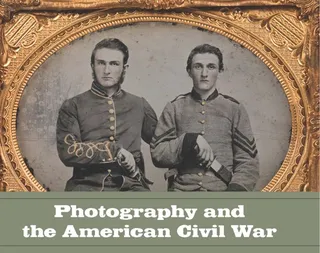
In this groundbreaking history of early American photography, Jeff L. Rosenheim explores how the medium's evolution as a cultural, commercial, and artistic preoccupation mirrored the dramatic development of the nation's sense of itself before, during, and after the Civil War and throughout its westward expansion. Alongside acknowledged early masters such as Josiah Johnson Hawes and Carleton E. Watkins, this publication highlights exceptional portraits, landscapes, still lifes, and genre scenes produced by little-known makers in small towns and cities outside the major urban centers. These daguerreotypes, ambrotypes, tintypes, cartes de visite, cyanotypes, cabinet cards, and gelatin silver prints span the gamut of early formats and processes and present a portrait of the burgeoning nation outside of the traditional grand narratives. Tracing the history of technological advances--such as the advent of the Kodak roll-film camera in the 1880s, which increased the accessibility of the medium--this landmark publication both highlights photography as the most democratic of art forms and celebrates the beguiling physical materiality that photographs possessed in the nineteenth and early twentieth centuries.
Published by The Metropolitan Museum of Art/Distributed by Yale University Press
Exhibition Schedule:
The Metropolitan Museum of Art, New York
(TBD)


Why Readwise Books?
Readwise Books is an ebook & audiobook platform that automatically logs how much you and your friends read, making it fun and easy to read more. Learn more →