Can We Count All the Faces? Exploring Simplicial Complexes
Report an issue
Tell us what's wrong and we'll take a look.
Thanks – we got it. We'll review and follow up if needed.
This title avoids the question format and emphasizes the broader significance of Simplicial Complexes. Breakdown: - Beyond Counting Faces: Moves beyond a basic aspect and sparks curiosity about what else there is. - Unveiling the Hidden Language of Shapes: Creates intrigue and suggests these structures reveal deeper properties of shapes. The piece could delve into the limitations of counting faces: - Faces as a Starting Point: Explain how counting faces provides basic information but doesn't capture the entire picture. - The Challenge of Higher Dimensions: Briefly discuss how counting faces becomes impractical for complex shapes in higher dimensions. The focus would then shift on the power of Simplicial Complexes: - Building Blocks of Complex Shapes: Highlight how these structures can represent intricate shapes in various fields like 3D modeling or network analysis. - Topological Analysis: Discuss how they allow us to analyze the fundamental properties of shapes (like holes or tunnels) regardless of size or deformation. - A Tool for Diverse Fields: Explore their applications in disciplines like physics, engineering, and even computer graphics. "Beyond Counting Faces" suggests a few content directions: - Visualizing Simplicial Complexes: Briefly discuss the importance of using visualizations or interactive tools to understand these concepts. - Historical Context: Give a concise overview of the development of Simplicial Complexes in mathematics. - Real-world Applications: Highlight specific examples of how these structures are used in various fields to solve practical problems.
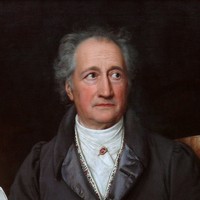
Johann Wolfgang von Goethe
Johann Wolfgang von Goethe was a German writer, poet, playwright, and philosopher, widely regarded as one of the most influential figures in Western literature. Born on August 28, 1749, in Frankfurt, Germany, he is best known for his works such as Faust, The Sorcerer's Apprentice, and Erlkönig. Goethe's works span a wide range of genres, including drama, poetry, and philosophy, and he was a central figure in the Sturm und Drang literary movement. His writing not only revolutionized German literature but also had a profound impact on political and philosophical thought. Throughout his career, Goethe was influenced by figures such as Friedrich Schiller and William Shakespeare, and his ideas on individuality and the human condition helped shape European intellectual history. Goethe was married to Christiane Vulpius from 1806 until her death in 1816. He spent much of his life in Weimar, Germany, where he died on March 22, 1832, at the age of 82. His legacy continues to influence writers, artists, and thinkers across the globe. His exploration of human nature and existential questions remains relevant in modern cultural and intellectual discussions.
More by Johann Wolfgang von Goethe




Why Readwise Books?
Readwise Books is an ebook & audiobook platform that automatically logs how much you and your friends read, making it fun and easy to read more. Learn more →