Report an issue
Tell us what's wrong and we'll take a look.
Thanks – we got it. We'll review and follow up if needed.
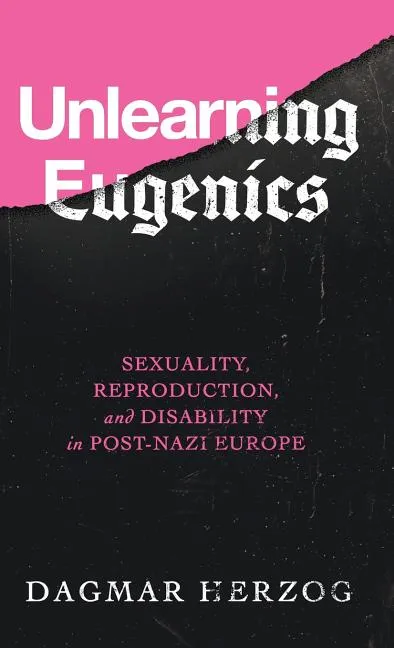
Bringing together the latest findings in Holocaust studies, the history of religion, and the history of sexuality in postwar--and now also postcommunist--Europe, Unlearning Eugenics shows how central the controversies over sexuality, reproduction, and disability have been to broader processes of secularization and religious renewal. Herzog also restores to the historical record a revelatory array of activists: from Catholic and Protestant theologians who defended abortion rights in the 1960s-70s to historians in the 1980s-90s who uncovered the long-suppressed connections between the mass murder of the disabled and the Holocaust of European Jewry; from feminists involved in the militant "cripple movement" of the 1980s to lawyers working for right-wing NGOs in the 2000s; and from a handful of pioneers in the 1940s-60s committed to living in intentional community with individuals with cognitive disability to present-day disability self-advocates.
Dagmar Herzog
Dagmar Herzog is Distinguished Professor of History and Daniel Rose Faculty Scholar at the Graduate Center, City University of New York, and has published extensively on the histories of religion, gender and sexuality, and the history of the Holocaust and its aftermath. She is the author of four previous books, including Sex after Fascism: Memory and Morality in Twentieth-Century Germany (2005), and the editor or co-editor of six anthologies spanning issues of war, sexuality, religion and historical theory.
More by Dagmar Herzog


Why Readwise Books?
Readwise Books is an ebook & audiobook platform that automatically logs how much you and your friends read, making it fun and easy to read more. Learn more →