Report an issue
Tell us what's wrong and we'll take a look.
Thanks – we got it. We'll review and follow up if needed.
An accessible foray into botany’s origins and how we can transform its future
Colonial ambitions spawned imperial attitudes, theories, and practices that remain entrenched within botany and across the life sciences. Banu Subramaniam draws on fields as disparate as queer studies, Indigenous studies, and the biological sciences to explore the labyrinthine history of how colonialism transformed rich and complex plant worlds into biological knowledge. Botany of Empire demonstrates how botany’s foundational theories and practices were shaped and fortified in the aid of colonial rule and its extractive ambitions. We see how colonizers obliterated plant time’s deep history to create a reductionist system that imposed a Latin-based naming system, drew on the imagined sex lives of European elites to explain plant sexuality, and discussed foreign plants like foreign humans. Subramanian then pivots to imagining a more inclusive and capacious field of botany untethered and decentered from its origins in histories of racism, slavery, and colonialism. This vision harnesses the power of feminist and scientific thought to chart a course for more socially just practices of experimental biology.
A reckoning and a manifesto, Botany of Empire provides experts and general readers alike with a roadmap for transforming the colonial foundations of plant science.
Banu Subramaniam
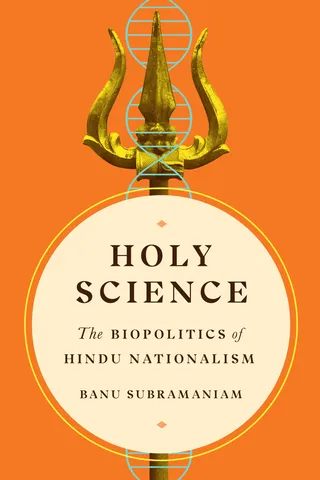
Banu Subramaniam is professor of women, gender, and sexuality studies at the University of Massachusetts, Amherst. She is author of Botany of Empire (Washington, 2024), Holy Science: The Biopolitics of Hindu Nationalism (Washington, 2019), and Ghost Stories for Darwin: The Science of Variation and the Politics of Diversity (Illinois, 2014).
More by Banu Subramaniam


Why Readwise Books?
Readwise Books is an ebook & audiobook platform that automatically logs how much you and your friends read, making it fun and easy to read more. Learn more →