
On My Own Publications
Report an issue
Tell us what's wrong and we'll take a look.
Thanks – we got it. We'll review and follow up if needed.

Throughout his career, Martin Heidegger read and reinterpreted his own writings. This was part of the entirely self-critical orientation of the journey in the landscape of thought.
On My Own Publications is the first English-language translation of volume 82 of Heidegger's Complete Works. Started a decade after Being and Time (1927), much of this volume presents running commentary, interpretations, and insights of many of Heidegger's fundamental works, illuminating the philosopher's notes and personal thoughts on his own works and offering a rare look inside the mind of an influential thinker.
Focusing on several works including What Is Metaphysics? (1929), The Origin of the Work of Art (1935-36), and The Letter on Humanism (1946), On My Own Publications presents Heidegger reading, interpreting, and confronting some of his own most important and influential publications.
Martin Heidegger
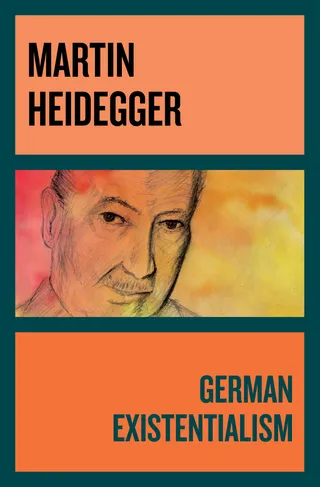
Heidegger’s contribution to the growth and development of National Socialism was immense. In this small anthology, Dr. Runes endeavors to point to the utter confusion Heidegger created by drawing, for political and social application of his own existentialism and metaphysics, upon the decadent and repulsive brutalization of Hitlerism. Martin Heidegger was a philosopher most known for his contributions to German phenomenological and existential thought. Heidegger was born in rural Messkirch in 1889 to Catholic parents. While studying philosophy and mathematics at Albert-Ludwig University in Freiburg, Heidegger became the assistant for the philosopher Edmund Husserl. Influenced by Husserl, Kierkegaard, and Nietzsche, Heidegger wrote extensively on the quality of Being, including his Opus Being and Time. He served as professor of philosophy at Albert-Ludwig University and taught there during the war. In 1933, Heidegger joined the National Socialist German Worker’s (or Nazi) Party and expressed his support for Hitler in several articles and speeches. After the war, his support for the Nazi party came under attack, and he was tried as a sympathizer. He was able to return to Albert Ludwig University, however, and taught there until he retired. Heidegger continued to lecture until his death in 1973.
More by Martin Heidegger









Why Readwise Books?
Readwise Books is an ebook & audiobook platform that automatically logs how much you and your friends read, making it fun and easy to read more. Learn more →