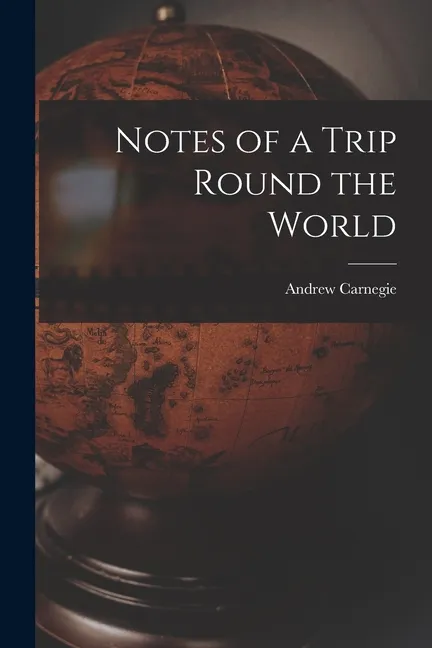
Notes of a Trip Round the World
Report an issue
Tell us what's wrong and we'll take a look.
Thanks – we got it. We'll review and follow up if needed.
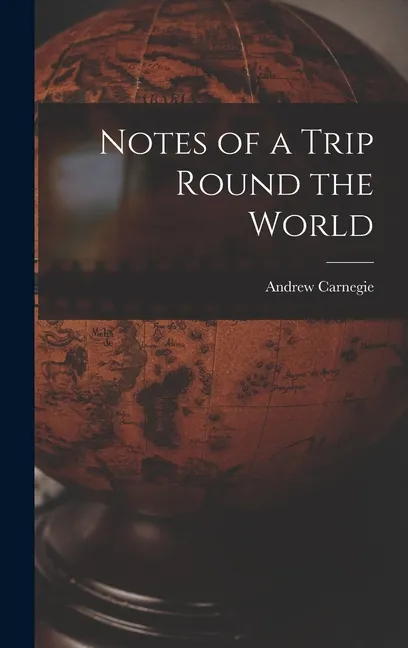
This work has been selected by scholars as being culturally important, and is part of the knowledge base of civilization as we know it.
This work is in the "public domain in the United States of America, and possibly other nations. Within the United States, you may freely copy and distribute this work, as no entity (individual or corporate) has a copyright on the body of the work.
Scholars believe, and we concur, that this work is important enough to be preserved, reproduced, and made generally available to the public. We appreciate your support of the preservation process, and thank you for being an important part of keeping this knowledge alive and relevant.
Andrew Carnegie
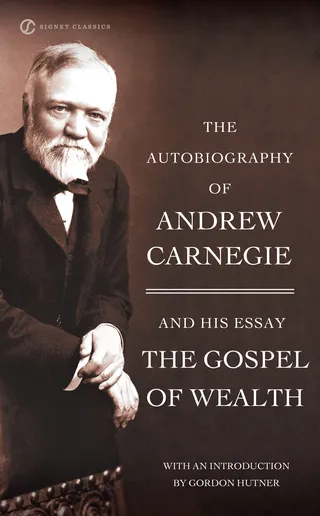
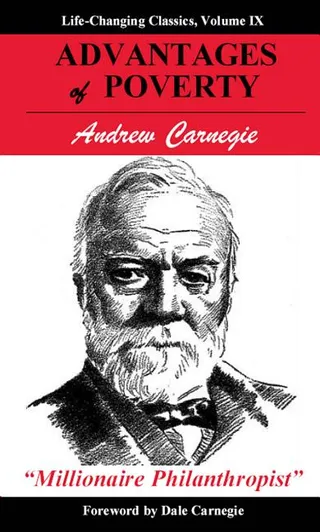
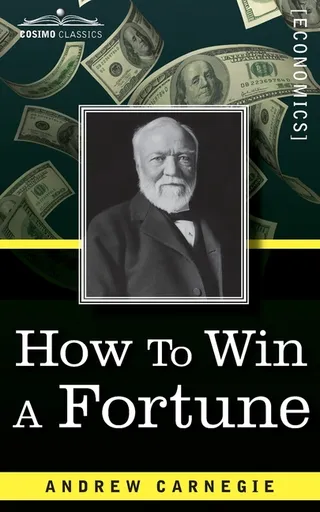
Andrew Carnegie (1835–1919) was a Scottish-American industrialist, railroad man, and steel magnate whose charitable giving and life philosophies (“The man who dies thus rich dies disgraced”) made him one of the most captivating figures in American history. After selling his Pittsburgh-based steel company to J. P. Morgan, Carnegie spent the remaining years of his life giving away roughly $350 million (the equivalent of almost $5 trillion today) to universities and charities around the world. A self-proclaimed positivist, his influence and beneficence are reflected in the names of institutions such as Carnegie Hall, Carnegie Mellon University, and the Carnegie Endowment for International Peace.
More by Andrew Carnegie




Why Readwise Books?
Readwise Books is an ebook & audiobook platform that automatically logs how much you and your friends read, making it fun and easy to read more. Learn more →