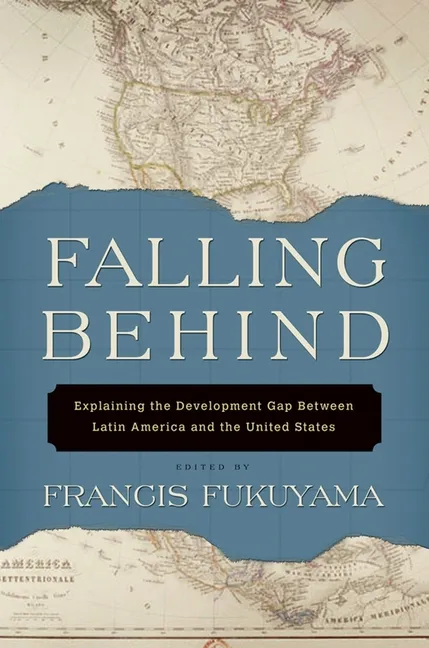
Falling Behind
Explaining the Development Gap Between Latin America and the United States
Report an issue
Tell us what's wrong and we'll take a look.
Thanks – we got it. We'll review and follow up if needed.
In Falling Behind, Francis Fukuyama gathers together some of the world's leading scholars on the subject to explain the nature of the gap and how it came to be. Tracing the histories of development over the past four hundred years and focusing in particular on the policies of the last fifty years, the contributors conclude that while many factors are important, economic policies and political systems are at the root of the divide. While the gap is deeply rooted in history, there have been times when it closed a bit as a consequence of policies chosen in places ranging from Chile to Argentina. Bringing to light these policy success stories, Fukuyama and the contributors offer a way forward for Latin American nations and improve their prospects for economic growth and stable political development.
Given that so many attribute the gap to either vast cultural differences or the consequences of U.S. economic domination, Falling Behind is sure to stir debate. And, given the pressing importance of the subject in light of economic globalization and the immigration debate, its expansive, in-depth portrait of the hemisphere's development will be a welcome intervention in the conversation.
Francis Fukuyama
Francis Fukuyama is a senior fellow and the Mosbacher director of the Center on Democracy, Development, and the Rule of Law at Stanford University. He is the author of Political Order and Political Decay, State-Building, The End of History and the Last Man, The Origins of Political Order, America at the Crossroads, and Falling Behind.


Why Readwise Books?
Readwise Books is an ebook & audiobook platform that automatically logs how much you and your friends read, making it fun and easy to read more. Learn more →