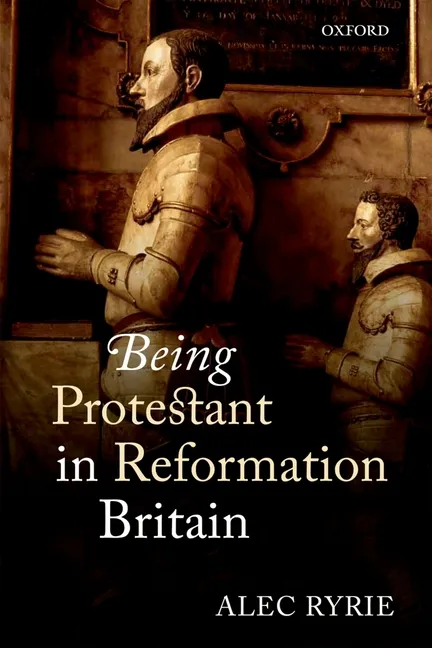
Being Protestant in Reformation Britain
Report an issue
Tell us what's wrong and we'll take a look.
Thanks – we got it. We'll review and follow up if needed.
Beginning from the surprisingly urgent, multifaceted emotions of Protestantism, Ryrie explores practices of prayer, of family and public worship, and of reading and writing, tracking them through the life course from childhood through conversion and vocation to the deathbed. He examines what Protestant piety drew from its Catholic predecessors and contemporaries, and grounds that piety in material realities such as posture, food, and tears.
This perspective shows us what it meant to be Protestant in the British Reformations: a meeting of intensity (a religion which sought authentic feeling above all, and which dreaded hypocrisy and hard-heartedness) with dynamism (a progressive religion, relentlessly pursuing sanctification and dreading idleness). That combination, for good or ill, gave the Protestant experience its particular quality of restless, creative zeal.
The Protestant devotional experience also shows us that this was a broad-based religion: for all the differences across time, between two countries, between men and women, and between puritans and conformists, this was recognisably a unified culture, in which common experiences and practices cut across supposed divides. Alec Ryrie shows us Protestantism, not as the preachers on all sides imagined it, but as it was really lived.
Alec Ryrie
Alec Ryrie is professor of the history of Christianity at Durham University and a fellow of the British Academy. His previous books include Unbelievers: An Emotional History of Doubt. He lives in rural County Durham.
More by Alec Ryrie


Why Readwise Books?
Readwise Books is an ebook & audiobook platform that automatically logs how much you and your friends read, making it fun and easy to read more. Learn more →