Report an issue
Tell us what's wrong and we'll take a look.
Thanks – we got it. We'll review and follow up if needed.
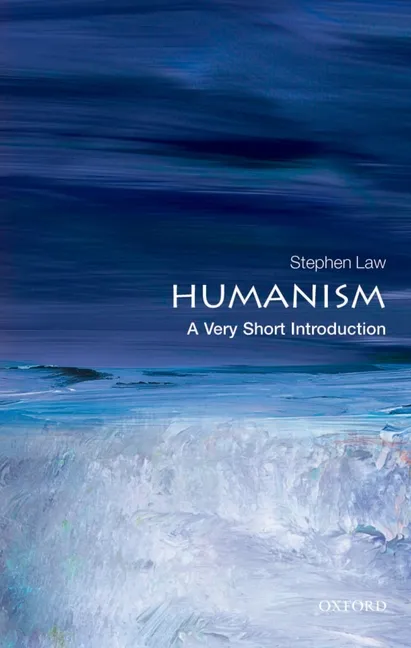
People of faith often argue that without God, there can be no morality. Indeed, without religion, our lives are left without meaning and are likely to degenerate into moral chaos. In this Very Short Introduction, philosopher Stephen Law explains why these claims are false and why humanism--though a rejection of religion--nevertheless provides both a moral basis and a meaning for our lives. Indeed, Law shows that humanism is a quite positive alternative to religion. The humanist is not simply one who denies the truth of religious belief, but one who believes we can enjoy meaningful, purposeful, and good lives without religion. And far from embracing moral nihilism, humanists are often deeply committed people, to be found at the forefront of many important ethical campaigns. Law goes on to show how the term "humanism" is used in a variety of ways. Marx described himself as a "humanist" but the Pope has also expressed support for what he calls "humanism." Law argues for humanism as it is most commonly understood--as a positive, moral form of atheism.
Stephen Law
Stephen Law was a school dropout who became a postman in Cambridge, then took a degree in philosophy at Oxford, becoming a Junior Research Fellow at the Queen's College. He now teaches philosophy at Heythrop College, University of London. He has published a number of books including The Philosophy Files, The Outer Limits and The Philosophy Gym.
More by Stephen Law



Why Readwise Books?
Readwise Books is an ebook & audiobook platform that automatically logs how much you and your friends read, making it fun and easy to read more. Learn more →