Report an issue
Tell us what's wrong and we'll take a look.
Thanks – we got it. We'll review and follow up if needed.
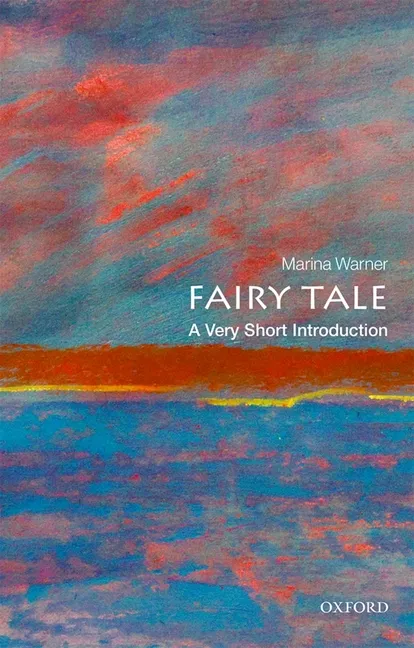
But what is a fairy tale? Where do they come from and what do they mean? What do they try and communicate to us about morality, sexuality, and society? The range of fairy tales stretches across great distances and time; their history is entangled with folklore and myth, and their inspiration draws on ideas about nature and the supernatural, imagination and fantasy, psychoanalysis and feminism.
In this Very Short Introduction, Marina Warner digs into a rich hoard of fairy tales in all their brilliant and fantastical variations, in order to define a genre and evaluate a literary form that keeps shifting through time and history. Drawing on a glittering array of examples, from classics such as Red Riding Hood, Cinderella, and The Sleeping Beauty, the Grimm Brothers' Hansel and Gretel, and Hans Andersen's The Little Mermaid, to modern-day realizations including Walt Disney's Snow White, Warner forms a persuasive case for fairy tale as a crucial repository of human understanding and culture.
ABOUT THE SERIES: The Very Short Introductions series from Oxford University Press contains hundreds of titles in almost every subject area. These pocket-sized books are the perfect way to get ahead in a new subject quickly. Our expert authors combine facts, analysis, perspective, new ideas, and enthusiasm to make interesting and challenging topics highly readable.
Marina Warner
Marina Warner is an award-winning writer of fiction, criticism and history; her works include novels and short stories as well as studies of art, myths, symbols, and fairytales. Her recent books include Fly Away Home (2015); Once Upon A Time: A Short History of Fairy Tale (2014), and Stranger Magic: Charmed States & The Arabian Nights (2013).
More by Marina Warner












Why Readwise Books?
Readwise Books is an ebook & audiobook platform that automatically logs how much you and your friends read, making it fun and easy to read more. Learn more →