Report an issue
Tell us what's wrong and we'll take a look.
Thanks – we got it. We'll review and follow up if needed.
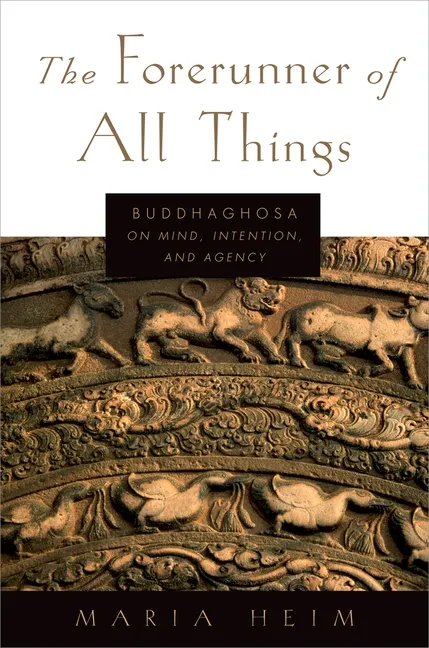
In contrast to many studies that assimilate Buddhist moral thinking to Western theories of ethics, the book attends to distinctively Buddhist ways of systematizing and theorizing their own categories. Arguing that meaning is a product of the explanatory systems used to explore it, the book pays particular attention to genre and to the 5th-century commentator Buddhaghosa's guidance on how to read Buddhist texts. The book treats all branches of the Pali canon (the Tipitaka, that is, the Suttas, the Abhidhamma, and the Vinaya), as well as narrative sources (the Dhammapada and the Jataka commentaries). In this sense it offers a comprehensive treatment of intention in the canonical Theravada sources. But the book goes further than this by focusing explicitly on the body of commentarial thought represented by Buddhaghosa. His work is at the center of the book's investigations, both insofar as he offers interpretative strategies for reading canonical texts, but also as he advances particular understandings of agency and moral psychology. The book offers the first book-length study devoted to Buddhaghosa's thought on ethics
Maria Heim
Maria Heim is the George Lyman Crosby 1896 & Stanley Warfield Crosby Professor in Religion at Amherst College. Her books include Words for the Heart: A Treasury of Emotions from Classical India, How to Feel: An Ancient Guide to Minding Our Emotions, and How to Lose Yourself: An Ancient Guide to Letting Go.
More by Maria Heim



Why Readwise Books?
Readwise Books is an ebook & audiobook platform that automatically logs how much you and your friends read, making it fun and easy to read more. Learn more →