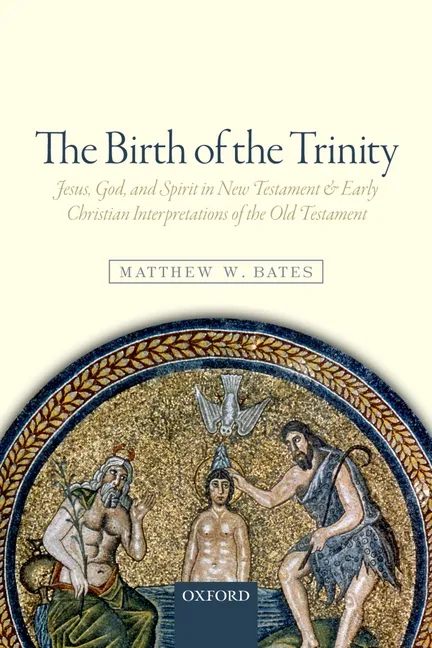
The Birth of the Trinity
Jesus, God, and Spirit in New Testament and Early Christian Interpretations of the Old Testament
Report an issue
Tell us what's wrong and we'll take a look.
Thanks – we got it. We'll review and follow up if needed.
How and when did Jesus and the Spirit come to be regarded as fully God? The Birth of the Trinity offers a new historical approach by exploring the way in which first- and second-century Christians read the Old Testament in order to differentiate the one God as multiple persons. The earliest Christians felt they could metaphorically 'overhear' divine conversations between Father, Son, and Spirit when reading the Old Testament. When these snatches of dialogue are connected and joined, they form a narrative about the unfolding interior divine life as understood by the nascent church. What emerges is not a static portrait of the triune God, but a developing story of divine persons enacting mutual esteem, voiced praise, collaborative strategy, and self-sacrificial love. The presence of divine dialogue in the New Testament and early Christian literature shows that, contrary to the claims of James Dunn and Bart Ehrman (among others), the earliest Christology was the highest Christology, as Jesus was identified as a divine person through Old Testament interpretation.
Matthew W. Bates
Matthew W. Bates is associate professor of theology at Quincy University.
More by Matthew W. Bates


Why Readwise Books?
Readwise Books is an ebook & audiobook platform that automatically logs how much you and your friends read, making it fun and easy to read more. Learn more →