Report an issue
Tell us what's wrong and we'll take a look.
Thanks – we got it. We'll review and follow up if needed.
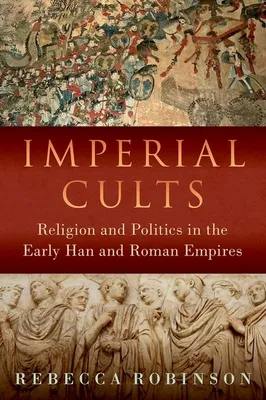
Employing a comparative methodology the author discusses some of the common strategies employed by the two rulers in order to centre religious and political authority around themselves. Both rulers incorporated new men from outside of the established court elite to serve in their religious institutions and as advisors, thus weakening the authority of those who had traditionally held it. They both expanded the reach of their imperially-sponsored cult, and refashioned important ceremonies to demonstrate and communicate the unprecedented achievements of each ruler. Emperor Wu recruited experts in mantic knowledge from far reaches of the empire, while Augustus co-opted loyal followers into the newly revived priestly colleges. Robinson shows how the rulers used their respective religious institutions to consolidate their authority, secure support, and communicate their authority to the elite and commoners alike. By using the comparative approach, the author not only reveals similar trends in the formation of ancient empires, but also shows how new perspectives on familiar material can be found when engaging with other societies.
Rebecca Robinson
By day, Rebecca Robinson works as a high school administrator. By night, she’s an avid reader, writer, and consumer of all things art. When she’s not writing, Rebecca loves to cook, spend time with her husband and son, and lounge in the garden with her husky.
More by Rebecca Robinson













Why Readwise Books?
Readwise Books is an ebook & audiobook platform that automatically logs how much you and your friends read, making it fun and easy to read more. Learn more →