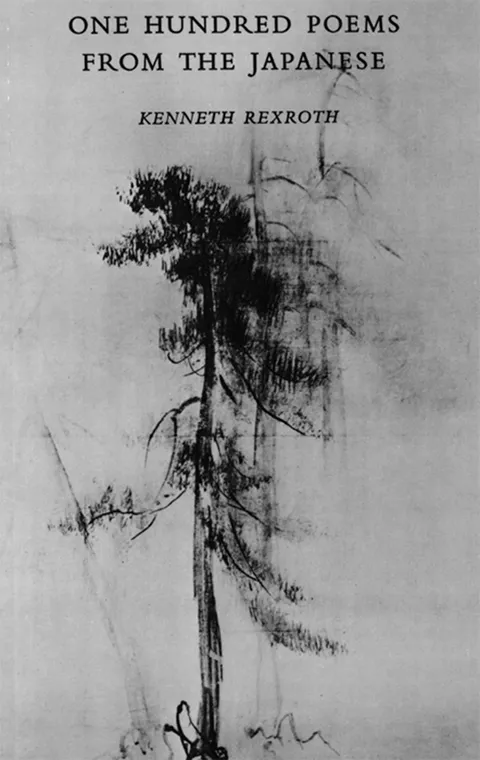
100 Poems from the Japanese
Report an issue
Tell us what's wrong and we'll take a look.
Thanks – we got it. We'll review and follow up if needed.
It is remarkable that any Westerner—even so fine a poet as Kenneth Rexroth—could have captured in translation so much of the subtle essence of classic Japanese poetry: the depth of controlled passion, the austere elegance of style, the compressed richness of imagery.
The poems are drawn chiefly from the traditional Manyoshu, Kokinshu and Hyakunin Isshu collections, but there are also examplaes of haiku and other later forms. The sound of the Japanese texts i reproduced in Romaji script and the names of the poets in the calligraphy of Ukai Uchiyama. The translator's introduction gives us basic background on the history and nature of Japanese poetry, which is supplemented by notes on the individual poets and an extensive bibliography.Kenneth Rexroth
Translated by
Poet-essayist Kenneth Rexroth (1905-1982) was a high-school dropout, disillusioned ex-Communist, pacifist, anarchist, rock-climber, critic and translator, mentor, Catholic-Buddhist spiritualist and a prominent figure of San Francisco's Beat scene. He is regarded as a central figure of the San Francisco Renaissance and is among the first American poets to explore traditional Japanese forms such as the haiku.


Why Readwise Books?
Readwise Books is an ebook & audiobook platform that automatically logs how much you and your friends read, making it fun and easy to read more. Learn more →