Report an issue
Tell us what's wrong and we'll take a look.
Thanks – we got it. We'll review and follow up if needed.
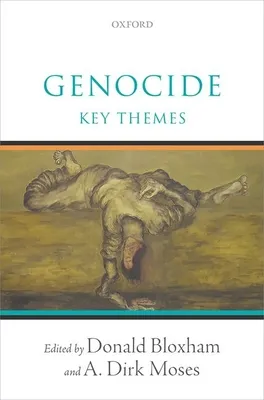
The growth of scholarship on the pressing problem of genocide shows no sign of abating. This volume takes stock of Genocide Studies in all its multi-disciplinary diversity by adopting a thematic rather than case-study approach. Each chapter is by an expert in the field and comprises an up-to-date survey of emerging and established areas of enquiry while highlighting problems and making suggestions about avenues for future research. Each essay also has a select bibliography to facilitate further reading. Key themes include imperial violence and military contexts for genocide, predicting, preventing, and prosecuting genocide, gender, ideology, the state, memory, transitional justice, and ecocide. The volume also scrutinises the concept of genocide - its elasticity, limits, and problems. It does not provide a definition of genocide but rather encourages the reader to think critically about genocide as a conceptual and legal category concerned with identity-based violence against civilians.
Donald Bloxham
Donald Bloxham has taught at Edinburgh University since 2001. He was appointed professor of modern history in 2007 and given the established Richard Pares chair of history in 2011. Beyond his work on the history and philosophy of the discipline of history, he is a specialist in the study of genocide and of the punishment of perpetrators of genocide. His book The Great Game of Genocide: Imperialism, Nationalism, and the Destruction of the Ottoman Armenians won the Raphael Lemkin Prize for genocide scholarship. He has also been a recipient of a Philip Leverhulme Prize and is currently on a Leverhulme Major Research Fellowship.














Why Readwise Books?
Readwise Books is an ebook & audiobook platform that automatically logs how much you and your friends read, making it fun and easy to read more. Learn more →