Report an issue
Tell us what's wrong and we'll take a look.
Thanks – we got it. We'll review and follow up if needed.
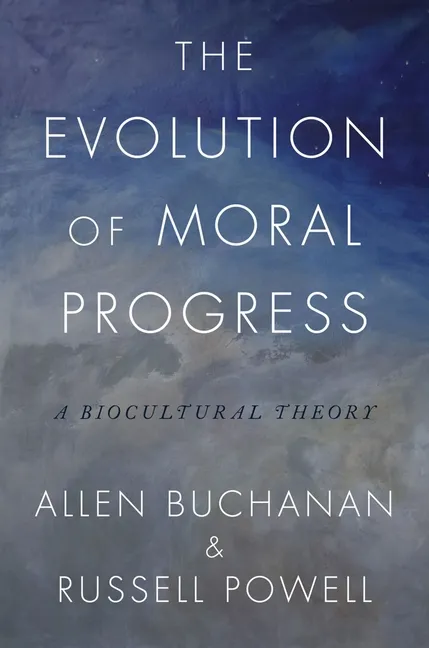
Their focus is on one especially important type of moral progress: gains in inclusivity. They develop a framework to explain progress in inclusivity to also illuminate moral regression--the return to exclusivist and "tribalistic" moral beliefs and attitudes. Buchanan and Powell argue those tribalistic moral responses are not hard-wired by evolution in human nature. Rather, human beings have an evolved "adaptively plastic" capacity for both inclusion and exclusion, depending on environmental conditions. Moral progress in the dimension of inclusivity is possible, but only to the extent that human beings can create environments conducive to extending moral standing to all human beings and even to some animals. Buchanan and Powell take biological evolution seriously, but with a critical eye, while simultaneously recognizing the crucial role of culture in creating environments in which moral progress can occur. The book avoids both biological and cultural determinism. Unlike earlier theories of moral progress, their theory provides a naturalistic account that is grounded in the best empirical work, and unlike earlier theories it does not present moral progress as inevitable or as occurring in definite stages; but rather it recognizes the highly contingent and fragile character of moral improvement.








Why Readwise Books?
Readwise Books is an ebook & audiobook platform that automatically logs how much you and your friends read, making it fun and easy to read more. Learn more →