Report an issue
Tell us what's wrong and we'll take a look.
Thanks – we got it. We'll review and follow up if needed.
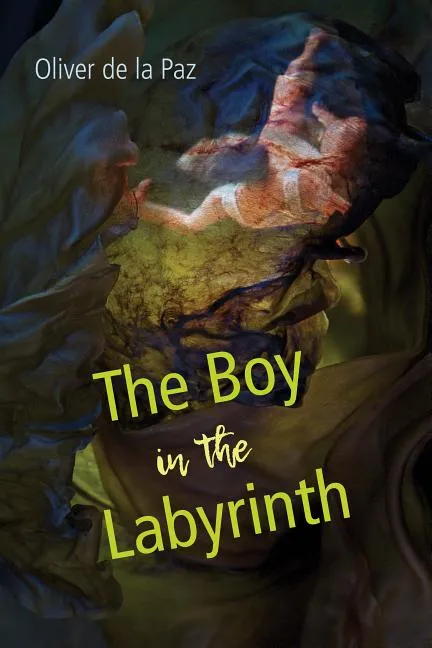
In a long sequence of prose poems, questionnaires, and standardized tests, The Boy in the Labyrinth interrogates the language of autism and the language barriers between parents, their children, and the fractured medium of science and school. Structured as a Greek play, the book opens with a parents' earnest quest for answers, understanding, and doubt. Each section of the Three Act is highlighted by "Autism Spectrum Questionnaires" which are in dialogue with and in opposition to what the parent perceives to be their relationship with their child. Interspersed throughout each section are sequences of standardized test questions akin to those one would find in grade school, except these questions unravel into deeper mysteries. The depth of the book is told in a series of episodic prose poems that parallel the parable of Theseus and the Minotaur. In these short clips of montage the unnamed "boy" explores his world and the world of perception, all the while hearing the rumblings of the Minotaur somewhere in the heart of an immense Labyrinth. Through the medium of this allusion, de la Paz meditates on failures, foundering, and the possibility of finding one's way.
Oliver de la Paz
Oliver de la Paz is the author of four collections of poetry: Names Above Houses, Furious Lullaby, Requiem for the Orchard, and Post Subject: A Fable. He is the co-editor of A Face to Meet the Faces: An Anthology of Contemporary Persona Poetry and co-chair of the Kundiman advisory board.
More by Oliver de la Paz



Why Readwise Books?
Readwise Books is an ebook & audiobook platform that automatically logs how much you and your friends read, making it fun and easy to read more. Learn more →