Report an issue
Tell us what's wrong and we'll take a look.
Thanks – we got it. We'll review and follow up if needed.
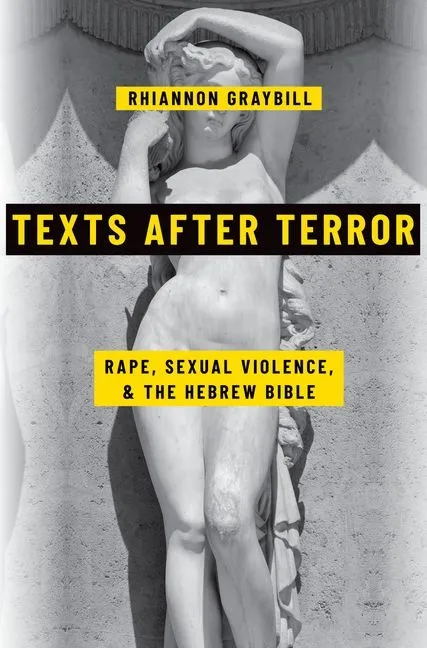
Texts after Terror offers an important new theory of rape and sexual violence in the Hebrew Bible. While the Bible is filled with stories of rape, scholarly approaches to sexual violence in the scriptures remain exhausted, dated, and in some cases even un-feminist, lagging far behind contemporary discourse about sexual violence and rape culture. Graybill responds to this disconnect by engaging contemporary conversations about rape culture, sexual violence, and #MeToo, arguing that rape and sexual violence - both in the Bible and in contemporary culture - are frequently fuzzy, messy, and icky, and that we need to take these features seriously. Texts after Terror offers a new framework informed by contemporary conversations about sexual violence, writings by victims and survivors, and feminist, queer, and affect theory. In addition, Graybill offers significant new readings of biblical rape stories, including Dinah (Gen. 34), Tamar (2 Sam. 13), Bathsheba (2 Sam. 11), Hagar (Gen. 16), Daughter Zion (Lam. 1-2), and the unnamed woman known as the Levite's concubine (Judges 19). Texts after Terror urges feminist biblical scholars and readers of all sorts to take seriously sexual violence and rape, while also holding space for new ways of reading these texts that go beyond terror, considering what might come after.
Rhiannon Graybill
Rhiannon Graybill is Marcus M. and Carole M. Weinstein & Gilbert M. and Fannie S. Rosenthal Chair of Jewish Studies and Professor of Religious Studies at the University of Richmond, USA
More by Rhiannon Graybill


Why Readwise Books?
Readwise Books is an ebook & audiobook platform that automatically logs how much you and your friends read, making it fun and easy to read more. Learn more →