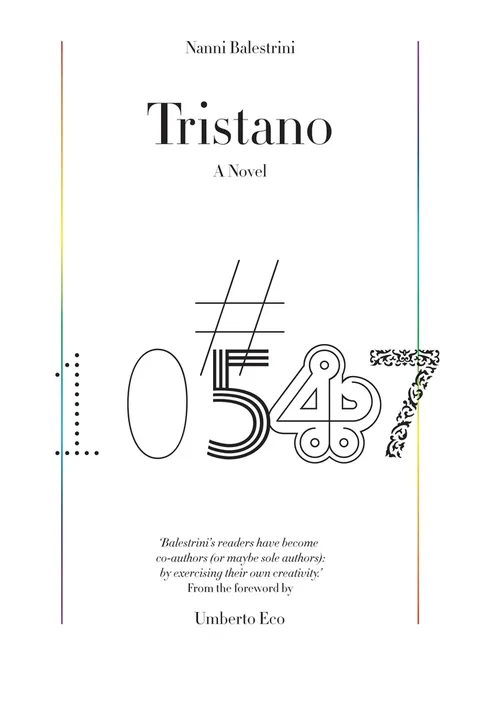
Tristano
Report an issue
Tell us what's wrong and we'll take a look.
Thanks – we got it. We'll review and follow up if needed.
Inspired by the legend of Tristan and Isolde, Tristano was first published in 1966 in Italian. But only recently has digital technology made it possible to realise the author's original vision. The novel comprises ten chapters, and the fifteen pairs of paragraphs in each of these are shuffled anew for each published copy. No two versions are the same. The random variations between copies enact the variegations of the human heart, as exemplified by the lovers at the centre of the story.
The copies of the English translation of Tristano are individually numbered, starting from 10,000 (running sequentially from the Italian and German editions). Included is a foreword by Umberto Eco explaining how Balestrini's experiment with the physical medium of the novel demonstrates
'that originality and creativity are nothing more than the chance handling of a combination'.
Nanni Balestrini
Nanni Balestrini was born in Milan in 1935 and was a member of the influential avant-garde Gruppo 63, along with Umberto Eco and Eduardo Sanguineti. He is the author of numerous volumes of poetry, including Blackout and Ipocalisse, and novels such as Tristano, Vogliamo Tutto, and La Violenza Illustrata.
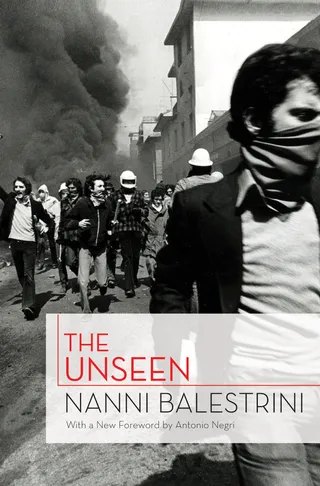
During the notorious mass arrests of writers and activists associated with Autonomy, which began in 1979, Balestrini was charged with membership of an armed organization and with subversive association. He went underground to avoid arrest and fl ed to France. As in so many other cases, no evidence was provided and he was acquitted of all the charges.
He currently lives in Rome, where he runs the monthly magazine of cultural intervention Alfabeta2 with Umberto Eco and others.
More by Nanni Balestrini


Why Readwise Books?
Readwise Books is an ebook & audiobook platform that automatically logs how much you and your friends read, making it fun and easy to read more. Learn more →