Report an issue
Tell us what's wrong and we'll take a look.
Thanks – we got it. We'll review and follow up if needed.
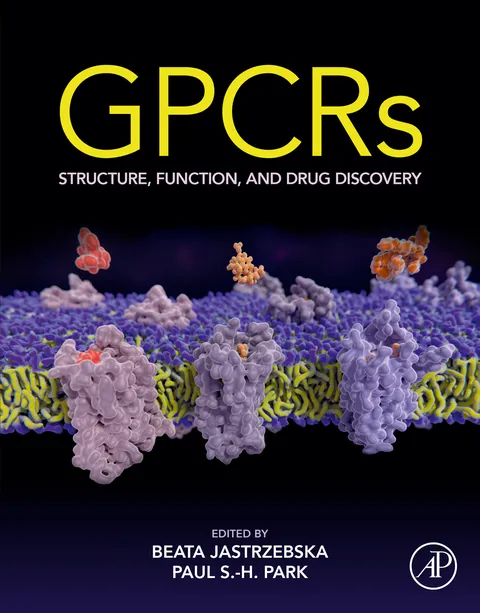
GPCRS: Structure, Function, and Drug Discovery provides a comprehensive overview of recent discoveries and our current understanding of GPCR structure, signaling, physiology, pharmacology and methods of study. In addition to the fundamental aspects of GPCR function and dynamics, international experts discuss crystal structures, GPCR complexes with partner proteins, GPCR allosteric modulation, biased signaling through protein partners, deorphanization of GPCRs, and novel GPCR-targeting ligands that could lead to the development of new therapeutics against human diseases. GPCR association with, and possible therapeutic pathways for, retinal degenerative diseases, Alzheimer’s disease, Parkinson’s disease, cancer and diabetic nephropathy, among other illnesses, are examined in-depth.
- Addresses our current understanding and novel advances in the GPCR field, directing readers towards recent finding of key significance for translational medicine
- Combines a thorough discussion of structure and function of GPCRs with disease association and drug discovery
- Features chapter contributions from international experts in GPCR structure, signaling, physiology and pharmacology
Beata Jastrzebska
Dr. Beata Jastrzebska is an Assistant Professor in the Department of Pharmacology, School of Medicine, Case Western Reserve University, Ohio. Her lab focuses on understanding the structure and function of the visual G protein coupled receptor (GPCR), rhodopsin. In particular, she is interested in delineating the rhodopsin supramolecular organization and its implications for binding with the cognate heterotrimeric G protein, transducin. Several mutations identified in the rhodopsin gene leading to the retinal degeneration in humans, such as retinitis pigmentosa (RP), could affect membrane oligomeric organization of this receptor. Therefore, efforts are directed towards understanding the molecular basis of rhodopsin gene associated retinal degradation in humans using biochemical, biophysical, and structural methods. Dr. Jastrzebska has published her research widely in peer reviewed journals and serials, including Biochemistry, Methods in Molecular Biology, JACS, and Methods in Enzymology.


Why Readwise Books?
Readwise Books is an ebook & audiobook platform that automatically logs how much you and your friends read, making it fun and easy to read more. Learn more →