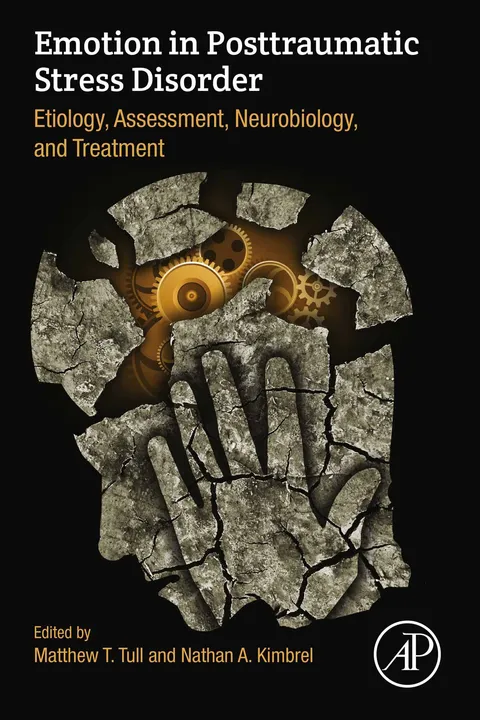
Emotion in Posttraumatic Stress Disorder
Etiology, Assessment, Neurobiology, and Treatment
Report an issue
Tell us what's wrong and we'll take a look.
Thanks – we got it. We'll review and follow up if needed.
Emotion in Posttraumatic Stress Disorder provides an up-to-date review of the empirical research on the relevance of emotions, such as fear, anxiety, shame, guilt, and disgust to posttraumatic stress disorder (PTSD). It also covers emerging research on the psychophysiology and neurobiological underpinnings of emotion in PTSD, as well as the role of emotion in the behavioral, cognitive, and affective difficulties experienced by individuals with PTSD. It concludes with a review of evidence-based treatment approaches for PTSD and their ability to mitigate emotion dysfunction in PTSD, including prolonged exposure, cognitive processing therapy, and acceptance-based behavioral therapy.
- Identifies how emotions are central to understanding PTSD.
- Explore the neurobiology of emotion in PTSD.
- Discusses emotion-related difficulties in relation to PTSD, such as impulsivity and emotion dysregulation.
- Provides a review of evidence-based PTSD treatments that focus on emotion.
Matthew Tull
Matthew T. Tull, PhD, is professor in the department of psychology at the University of Toledo, Ohio.
Nathan Kimbrel
Assistant Director for Implementation Science and Program Evaluation and the Assistant Director of the Genetics Research Laboratory of the Department of Veterans Affairs Mid-Atlantic Mental Illness Research, Education, and Clinical Center (MIRECC). He is also an Assistant Professor in the Department of Psychiatry and Behavioral Sciences in the Duke University School of Medicine. Dr. Kimbrel's program of research is focused on the development and maintenance of PTSD in military veterans and firefighters, as well as maladaptive behaviors commonly associated with PTSD, including suicidal and nonsuicidal self-injury, depression, and substance abuse. Dr. Kimbrel has published more than 100 scientific publications to date and his research has been cited more than 1500 times. He has also been the recipient of six grants from the Department of Veterans Affairs as a Principal Investigator in addition to having served as a Co-Investigator on 12 other federally-funded grants.


Why Readwise Books?
Readwise Books is an ebook & audiobook platform that automatically logs how much you and your friends read, making it fun and easy to read more. Learn more →