Report an issue
Tell us what's wrong and we'll take a look.
Thanks – we got it. We'll review and follow up if needed.
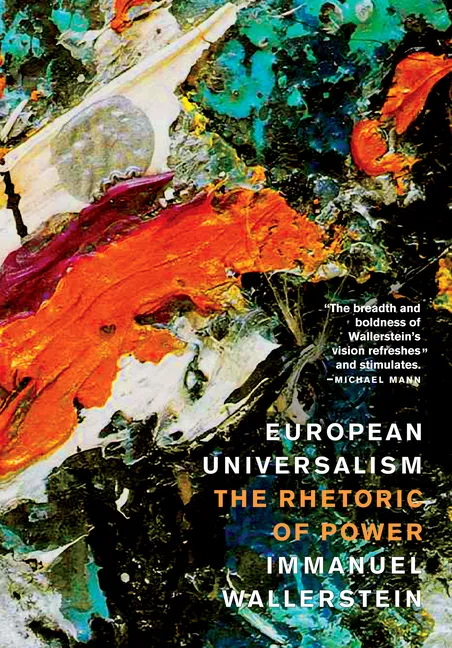
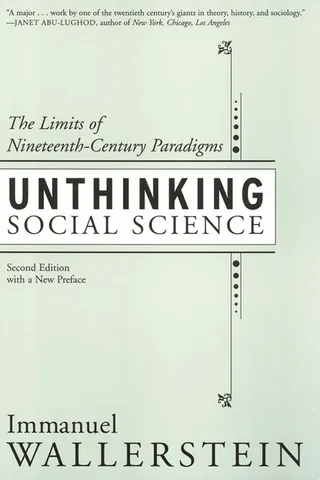
Ever since the Enlightenment, Western intervention around the world has been justified by appeals to notions of civilization, development, and progress. The assumption has been that such ideas are universal, encrusted in natural law. But, as Immanuel Wallerstein argues in this short and elegant philippic, these concepts are, in fact, not global. Rather, their genesis is firmly rooted in European thought and their primary function has been to provide justification for powerful states to impose their will against the weak under the smoke screen of what is supposed to be both beneficial to humankind and historically inevitable.
With great acuity Wallerstein draws together discussions of the idea of orientalism, the right to intervene, and the triumph of science over the humanities to explain how strategies designed to promote particular Western interests have acquired an all-inclusive patina.
Wallerstein concludes by advocating a true universalism that will allow critical appraisal of all justifications for intervention by the powerful against the weak. At a time when such intervention--in the name of democracy and human rights--has returned to the center stage of world politics, his treatise is both relevant and compelling.
Immanuel Wallerstein
Immanuel Wallerstein is director of the Fernand Braudel Center at the State University of New York. His books include a three-volume study, The Modern World-System, Historical Capitalism, and, cowritten with Etienne Balibar, Race, Nation, Class.
More by Immanuel Wallerstein



Why Readwise Books?
Readwise Books is an ebook & audiobook platform that automatically logs how much you and your friends read, making it fun and easy to read more. Learn more →