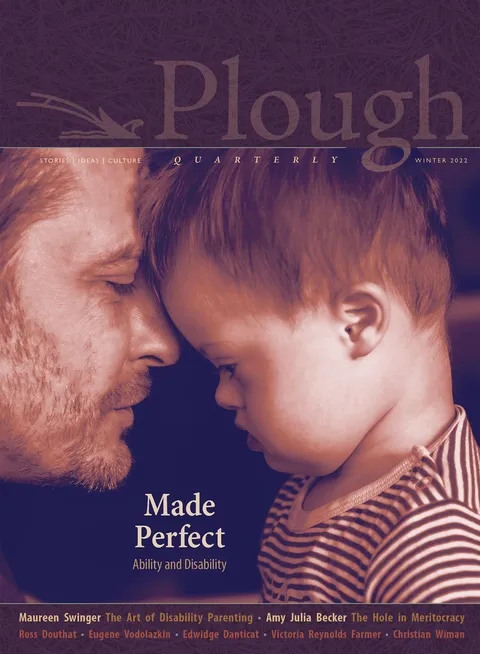
Plough Quarterly No. 30 - Made Perfect
Ability and Disability
Report an issue
Tell us what's wrong and we'll take a look.
Thanks – we got it. We'll review and follow up if needed.
The ancient Greek ideal linked physical wholeness to moral wholeness - the virtuous citizen was "beautiful and good." It's an ideal that has all too often turned deadly, casting those who do not measure up as less than human. In the pre-Christian era, infants with disabilities were left on the rocks; in modern times, they have been targeted by eugenics.
Much has changed, thanks to the tenacious advocacy of the disability rights movement. Yesteryear's hellish institutions have given way to customized educational programs and assisted living centers. Public spaces have been reconfigured to improve access. Therapies and medical technology have advanced rapidly in sophistication and effectiveness. Protections for people with disabilities have been enshrined in many countries' antidiscrimination laws.
But these victories, impressive as they are, mask other realities that collide awkwardly with society's avowals of equality. Why are parents choosing to abort a baby likely to have a disability? Why does Belgian law allow for euthanasia in cases of disability, even absent a terminal diagnosis or physical pain? Why, when ventilators were in short supply during the first Covid wave, did some states list disability as a reason to deny care?
On this theme:
- Heonju Lee tells how his son with Down syndrome saved another child's life.
- Molly McCully Brown and Victoria Reynolds Farmer recount their personal experiences with disability.
- Amy Julia Becker says meritocracies fail because they value the wrong things.
- Maureen Swinger asks six mothers around the world about raising a child with disabilities.
- Joe Keiderling documents the unfinished struggle for disability rights.
- Isaac T. Soon wonders if Saint Paul's "thorn in the flesh" was a disability.
- Leah Libresco Sargeant reviews What Can a Body Do? and Making Disability Modern.
- Sarah C. Williams says testing for fetal abnormalities is not a neutral practice.
Also in the issue:
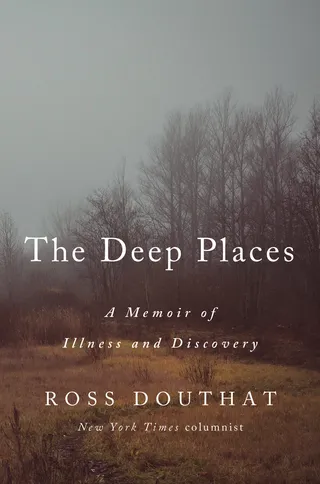
- Ross Douthat is brought low by intractable Lyme disease.
- Edwidge Danticat flees an active shooter in a packed mall.
- Eugene Vodolazkin finds comic relief at funerals, including his own father's.
- Kelsey Osgood discovers that being an Orthodox Jew is strange, even in Brooklyn.
- Christian Wiman pens three new poems.
- Susannah Black profiles Flannery O'Conner.
- Our writers review Eyal Press's Dirty Work, Steve Coll's Directorate S, and Millennial Nuns by the Daughters of Saint Paul.
Plough Quarterly features stories, ideas, and culture for people eager to apply their faith to the challenges we face. Each issue includes in-depth articles, interviews, poetry, book reviews, and art.
Molly McCully Brown
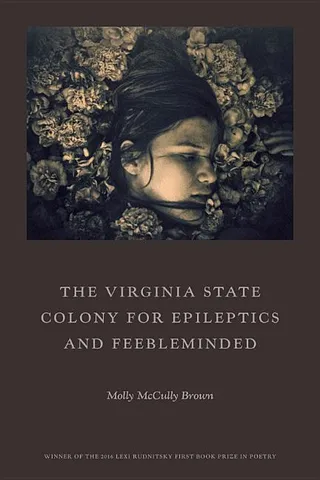
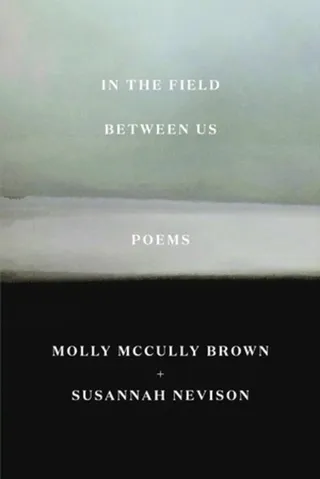
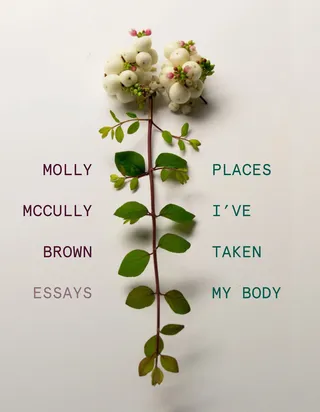
Molly McCully Brown is the author of the essay collection Places I’ve Taken my Body—published in the United States in 2020 by Persea Books and in the United Kingdom in 2021 by Faber & Faber— and the poetry collection The Virginia State Colony For Epileptics and Feebleminded (Persea Books, 2017), which won the 2016 Lexi Rudnitsky First Book Prize and was named a New York Times Critics’ Top Book of 2017. With Susannah Nevison, she is coauthor of the poetry collection In The Field Between Us (Persea Books, 2020), an NEA Big Read selection. Brown has been the recipient of the Amy Lowell Poetry Traveling Scholarship, a United States Artists Fellowship, a Civitella Ranieri Foundation Fellowship and the Jeff Baskin Writers Fellowship from the Oxford American magazine. Her poems and essays have appeared in The Paris Review, The Guardian, Virginia Quarterly Review, The New York Times, The Yale Review and elsewhere. She is Associate Professor of Creative Writing at Sewanee: the University of the South, and Editor-in-Chief of Image Journal.
More by Molly McCully Brown


Christian Wiman
Christian Wiman is the Clement-Muehl Professor of the Arts at Yale Divinity School. He is the author, editor, or translator of fifteen books, including Zero at the Bone and Hammer Is the Prayer. His work appears regularly in Harper’s, The New Yorker, and Commonweal.
More by Christian Wiman
Ross Douthat
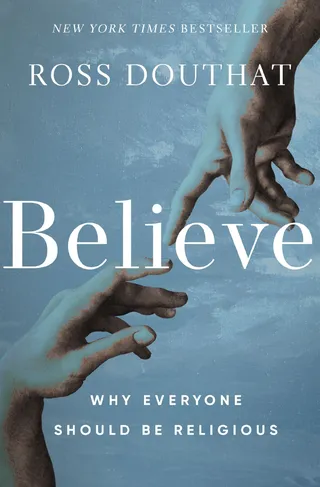
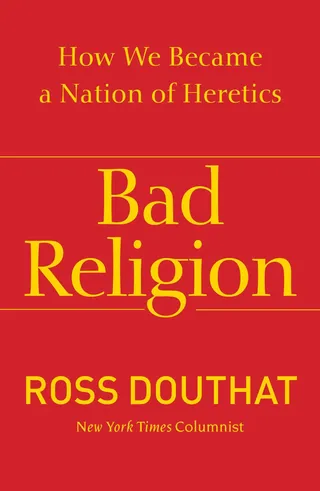
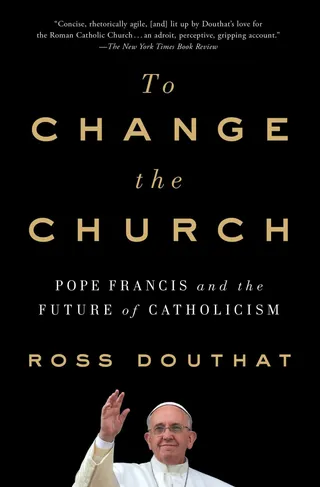
Ross Douthat has been a New York Times Opinion columnist since April 2009. Previously, he was a senior editor at the Atlantic. He is the author of The Deep Places; The Decadent Society; To Change the Church; Bad Religion; Privilege; and, with Reihan Salam, Grand New Party. He is the film critic for National Review. He lives with his wife and five children in New Haven, Connecticut.
More by Ross Douthat


Eugene Vodolazkin
Eugene Vodolazkin’s second novel, Laurus, won both of Russia’s major literary awards, the National Big Book Award and the Yasnaya Polyana Book Award, and was shortlisted for the National Bestseller Prize and the Russian Booker Prize. His debut novel, Solovyov and Larionov, was shortlisted for the Andrei Bely Prize and the Big Book Award. Two other critically acclaimed novels, The Aviator and Brisbane, have also been translated into English. Vodolazkin was the 2019 winner of the Solzhenitsyn Prize. He was born in Kiev in 1964 and has worked in the department of Old Russian Literature at Pushkin House since 1990. He is an expert in medieval history and folklore and has numerous academic books and articles to his name. The author lives with his family in St. Petersburg, Russia.
More by Eugene Vodolazkin

Sarah C Williams
Sarah C. Williams trained as an historian at the University of Oxford, where she subsequently taught British and European political and cultural history. After seventeen years at Oxford, in 2005 she moved with her family to Vancouver, Canada, where she taught history at Regent College. Today Williams lives with her husband Paul in the Cotswolds, close to the city of Oxford, where she continues her research, writing, and teaching. The daughter of popular British author Jennifer Rees Larcombe, Williams is the author of Perfectly Human, a spiritual autobiography in which she reflects on contemporary debates surrounding identity and personhood.
More by Sarah C Williams
Leah Libresco Sargeant
Leah Libresco Sargeant works on family policy in Washington, DC. She is the author of Building the Benedict Option and Arriving at Amen. She runs the Substack community Other Feminisms.
More by Leah Libresco Sargeant


Why Readwise Books?
Readwise Books is an ebook & audiobook platform that automatically logs how much you and your friends read, making it fun and easy to read more. Learn more →