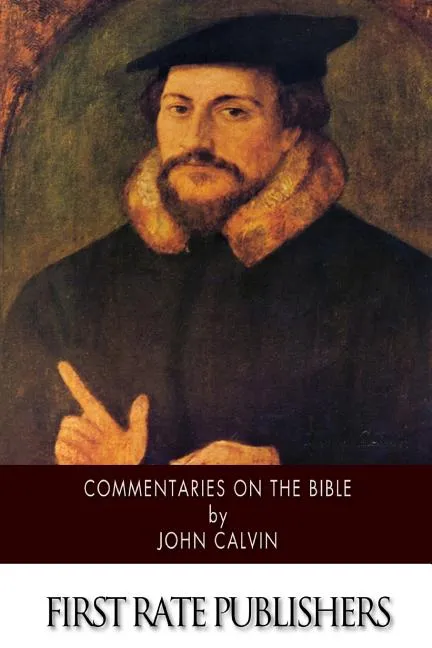
Commentaries on the Bible
Report an issue
Tell us what's wrong and we'll take a look.
Thanks – we got it. We'll review and follow up if needed.
John Calvin (10 July 1509 - 27 May 1564) was one of the most influential Christians of the last millennium. An influential French theologian and pastor during the Protestant Reformation, Calvin was a principal figure in the development of the system of Christian theology later named after him. Calvin broke from the Roman Catholic Church around 1530, and after religious tensions provoked a violent uprising against Protestants in France, Calvin fled to Switzerland, where he published the first edition of his most famous work, Institutes of the Christian Religion in 1536. In addition to the Institutes, he wrote commentaries on most books of the Bible, as well as theological treatises and confessional documents. Calvin was influenced by the Augustinian tradition, which led him to expound the doctrine of predestination and the absolute sovereignty of God in salvation of the human soul from death and eternal damnation. These writings eventually led to Calvinism, which continues to remain a branch of Christianity today.
John Calvin
Benjamin Wirt Farley is Younts Professor Emeritus of Bible, Religion, and Philosophy at Erskine College. He is the translator of John Calvin's Sermons on the Ten Commandments.
More by John Calvin



Why Readwise Books?
Readwise Books is an ebook & audiobook platform that automatically logs how much you and your friends read, making it fun and easy to read more. Learn more →