Report an issue
Tell us what's wrong and we'll take a look.
Thanks – we got it. We'll review and follow up if needed.
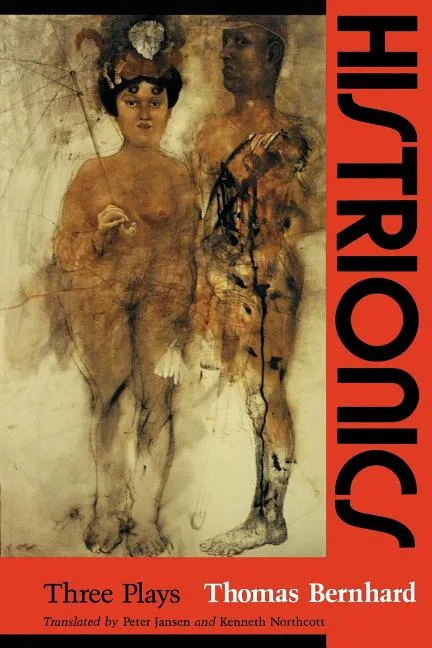
Although he is best known in the United States as a novelist, Austrian writer Thomas Bernhard has been hailed in Europe as one of the most significant and controversial of contemporary playwrights. George Steiner has predicted that the current era in German-language literature will be recognized as the "Bernhard period"; John Updike compares Bernhard with Kafka, Grass, Handke, and Weiss. His dark, absurdist plays can be likened to those of Beckett and Pinter, but their cultural and political concerns are distinctly Bernhard's. While Austria's recent political history lends particular credibility to Bernhard's satire, his criticisms are directed at the modern world generally; his plays grapple with questions of totalitarianism and the subjection of the individual and with notions of reality and appearance.
Thomas Bernhard
Thomas Bernhard (1931-89) grew up in Salzburg and Vienna, where he studied music. In 1957 he began a second career as a playwright, poet, and novelist. He went on to win many of the most prestigious literary prizes of Europe, including the Austrian State Prize, the Bremen and Büchner prizes, and Le Prix Séguier.
More by Thomas Bernhard











Why Readwise Books?
Readwise Books is an ebook & audiobook platform that automatically logs how much you and your friends read, making it fun and easy to read more. Learn more →