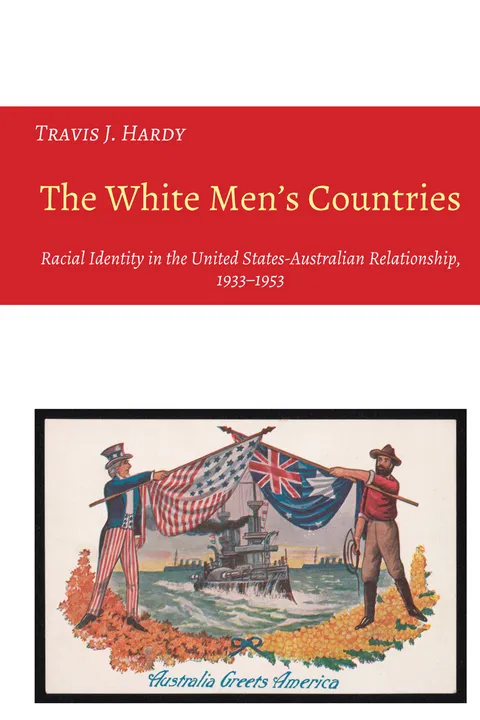
The White Men's Countries
Racial Identity in the United States-Australian Relationship, 1933-1953
Report an issue
Tell us what's wrong and we'll take a look.
Thanks – we got it. We'll review and follow up if needed.
The White Men's Countries explores how a shared ideal of race united the American and Australian governments during World War II and the early Cold War periods. This interpretation places cultural and ideological factors alongside the traditional emphasis on pragmatic economic and security considerations in explaining why two nations whose objectives in the Pacific region were often at odds were able to craft one of the most enduring diplomatic relationships of the twentieth century. It examines not only official policies and attitudes but also emphasizes the shared views on race carried by both American and Australian citizens that helped to ameliorate, and at times complicate, the bond between Washington D.C. and Canberra. This work also places greater emphasis on the post-World War II relationship as being the most crucial time in the shaping of the alliance. The White Men's Countries serves to help broaden our understanding of how racial ideology played a powerful role in the transnational relationships formed by the United States and Australia in the mid-twentieth century and how influential ideological factors became an international diplomacy.


Why Readwise Books?
Readwise Books is an ebook & audiobook platform that automatically logs how much you and your friends read, making it fun and easy to read more. Learn more →